DP-750 Microsoft Implementing Data Engineering Solutions Using Azure Databricks Free Practice Exam Questions (2026 Updated)
Prepare effectively for your Microsoft DP-750 Implementing Data Engineering Solutions Using Azure Databricks certification with our extensive collection of free, high-quality practice questions. Each question is designed to mirror the actual exam format and objectives, complete with comprehensive answers and detailed explanations. Our materials are regularly updated for 2026, ensuring you have the most current resources to build confidence and succeed on your first attempt.
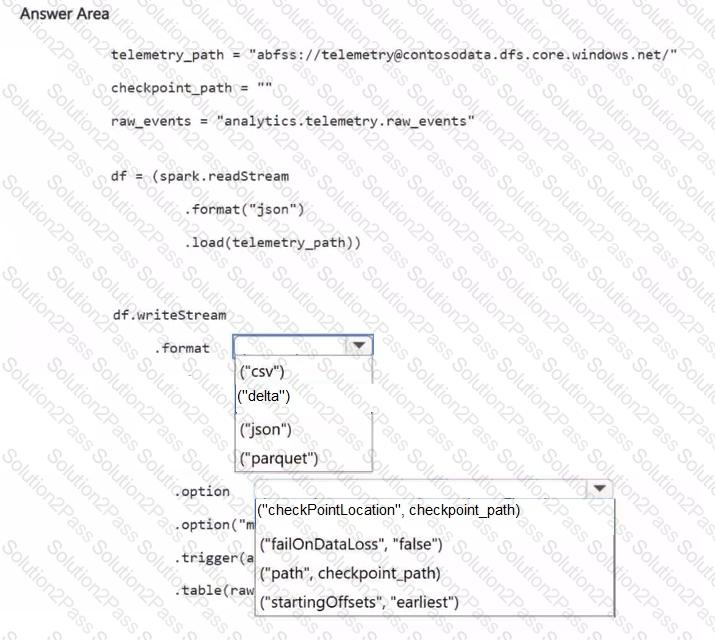
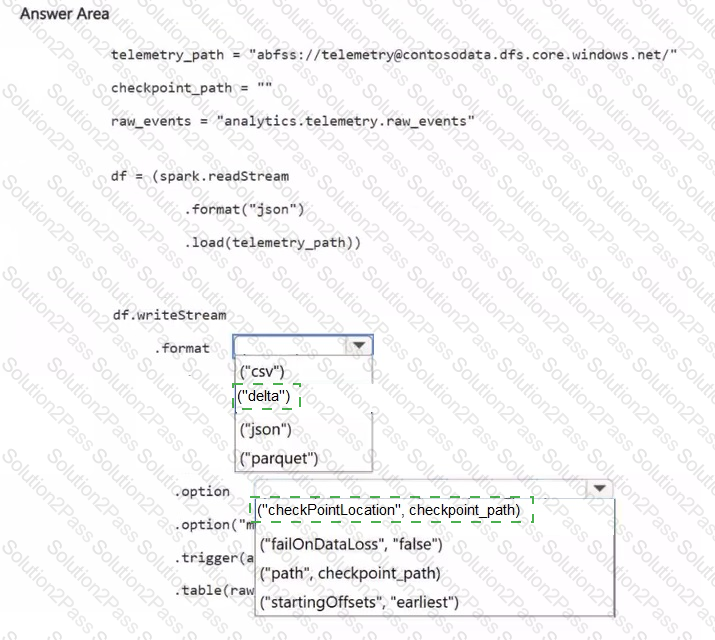
You need to complete the PySpark code for the Spark Structured Streaming pipelines. The solution must meet the data ingestion and processing requirements.
How should you complete the code segment? To answer, select the appropriate options in the answer area.
NOTE: Each correct selection is worth one point.
You manage Declarative Automation Bundles by using the Databricks CLI.
You run the following command in a terminal window.
databricks bundle init
What occurs when you run the command?
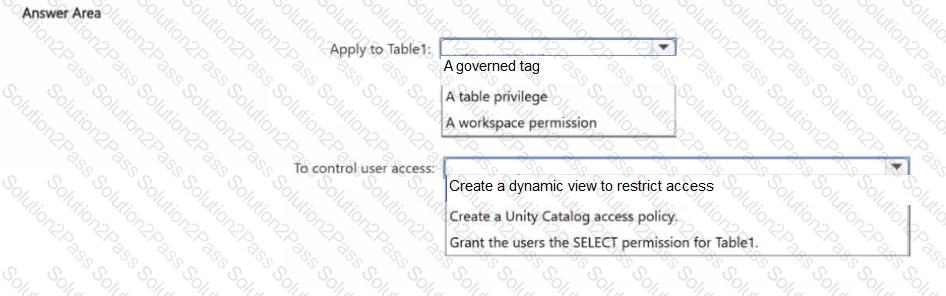
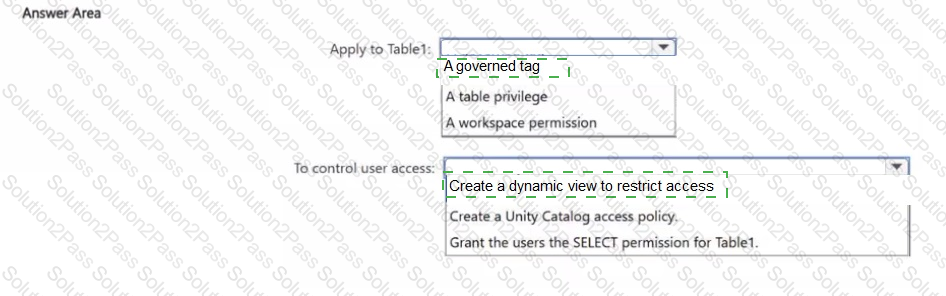
You have an Azure Databricks workspace that is enabled for Unity Catalog and contains a catalog named CatalogV Catalog1 contains a schema named Schema! and a table named Table1.
You need to ensure that access to the data in Table1 is controlled by using attribute based access control (ABAC).
What should you apply to Table1, and how should you control access for users? To answer, select the appropriate options in the answer area.
NOTE: Each correct selection is worth one point.
You have an Azure Databticks workspace that is enabled for Unity Catalog and contains a catalog named catalog1.
You have a group named group!
You plan to create a schema named schema1 in catalog1.
You need to ensure that group1 meets the following requirements:
• Can create tables in schema1
• Can modify and query tables
• Cannot grant permissions for the schema and its objects
How should you complete the SQL statements? To answer, select the appropriate options in the answer area. NOTE: Each correct selection is worth one point.


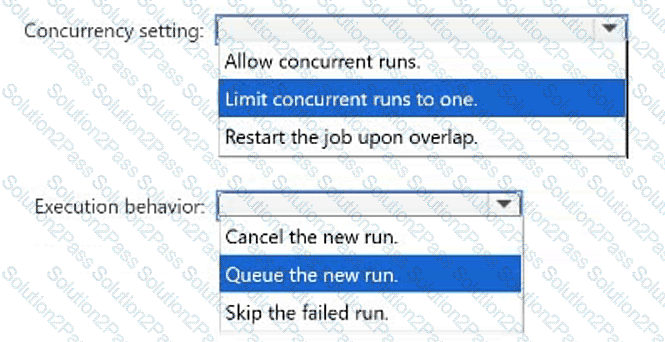
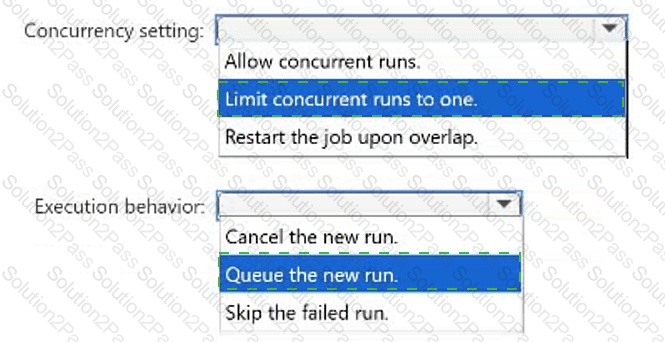
You have an Azure Databricks workspace that contains a job in Lakeflow Jobs named Job1.
Job1 runs every hour.
Occasionally, Job1 takes longer than one hour to complete.
You need to configure the job scheduling behavior to meet the following requirements:
Overlapping runs must be prevented to avoid data corruption.
Scheduled runs must not be discarded when another run is already active.
What should you configure? To answer, select the appropriate options in the answer area.
NOTE: Each correct selection is worth one point.
You have an Azure Databricks workspace that is attached to a Unity Catalog metastore named metastore1. Metastore1 contains a catalog named catalog 1.
You need to create a new schema named schema2 that meets the following requirements:
• Is contained in catalog1
• Uses abfss://containergstorageaccount.dfs.core.windows.net/data as the Managed location
Which SQL statement should you execute?
You have an Azure Databricks workspace that is enabled for Unity Catalog and contains a managed Delta table named Table1. Table1 stores customer data.
You need to implement a data retention solution that meets the following requirements:
Deleted data must be retained for 30 days to support audits.
Deleted data that is older than 30 days must be removed permanently.
The solution must minimize administrative effort.
Which two properties should you configure? Each correct answer presents part of the solution.
NOTE: Each correct selection is worth one point.
You need to configure the telemetry pipeline to support the planned changes for pipeline orchestration and address the resiliency issues.
What should you do?
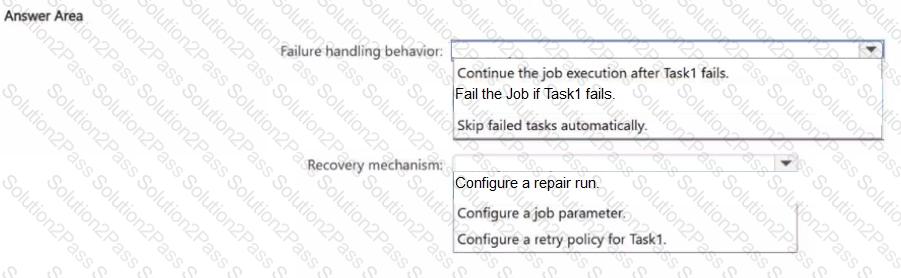
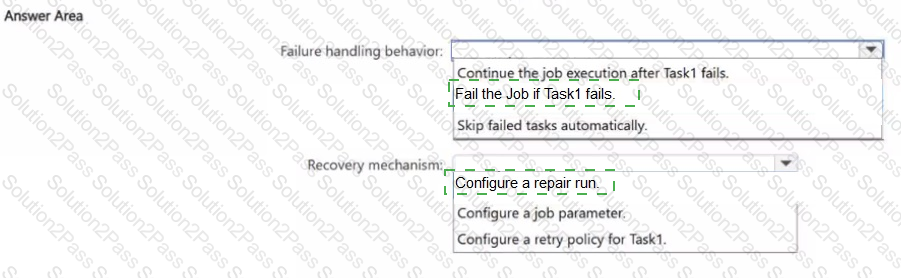
You have an Azure Databricks workspace that contains a job in Lakeflow Jobs named Job1.
Job! contains three tasks named Task1, Task2. and Task3.
If Task1 fails, Task2 and Task3 must be prevented from running. Successfully completed tasks must NOT rerun during recovery.
You need to configure Job1 to support controlled failure handling and recovery
What should you configure? To answer, select the appropriate options in the answer area.
NOTE: Each correct selection is worth one point.
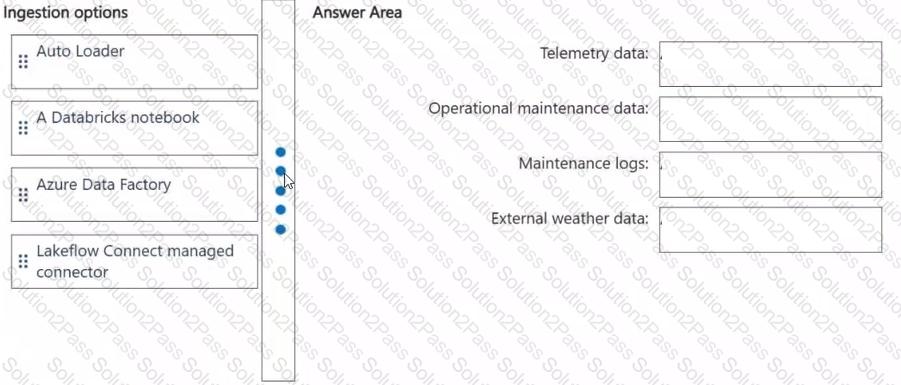
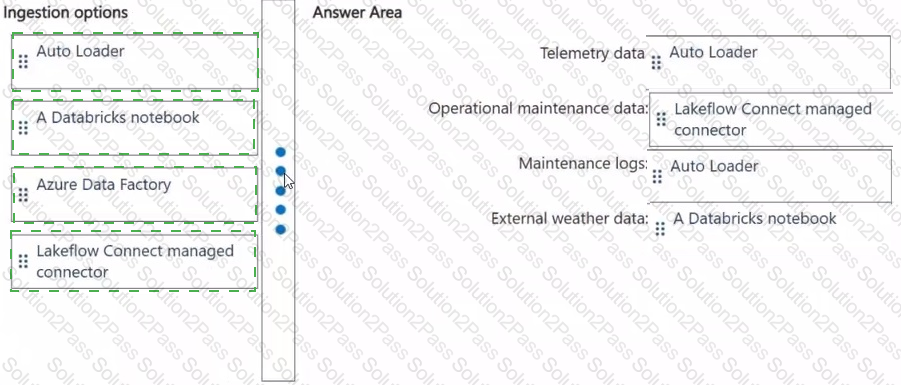
Which ingestion option should you recommend for each data source? To answer, drag the appropriate options to the correct data sources. Each option may be used once, more than once, or not at all. You may need to drag the split bar between panes or scroll to view content.
NOTE: Each correct selection is worth one point.
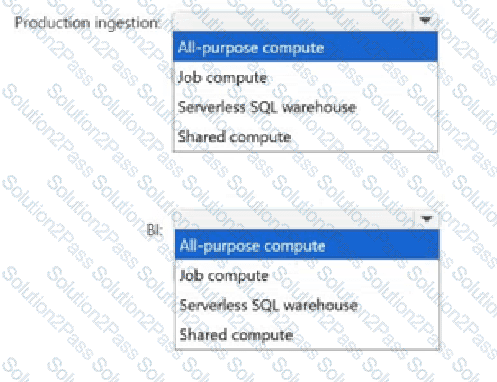
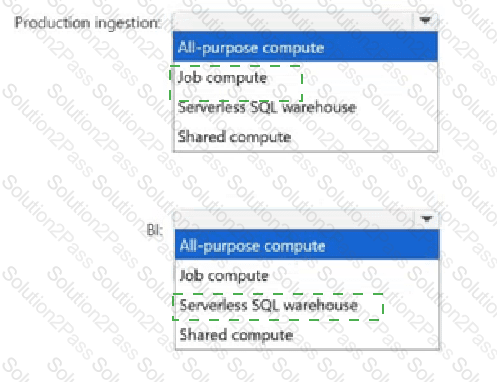
You need to recommend a compute type for the production ingestion workloads and BI workloads. The solution must meet the environment and compute requirements.
What should you recommend for each type of workload? To answer, select the appropriate options in the answer area.
NOTE: Each correct selection is worth one point.
You need to develop the task logic for a new job in Lakeflow Jobs that processes telemetry data.
Each task must contain only the appropriate logic for its step in the pipeline. The solution must support the planned changes and meet the data ingestion and processing requirements.
What should you do?
Which SCD type should you use to support the planned data modeling changes? To answer, drag the appropriate types to the correct issues. Each type may be used once, more than once, or not at all. You may need to drag the split bar between panes or scroll to view content.
NOTE: Each correct selection is worth one point.
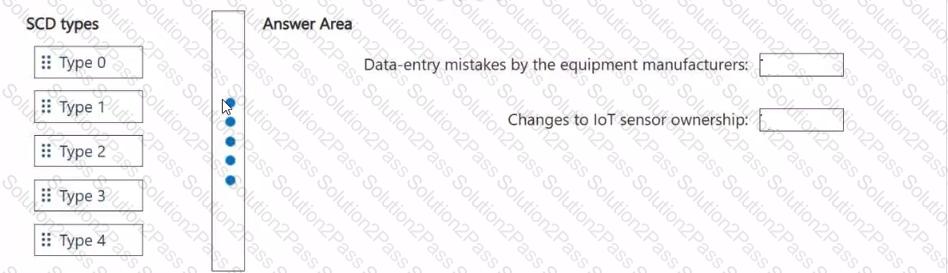
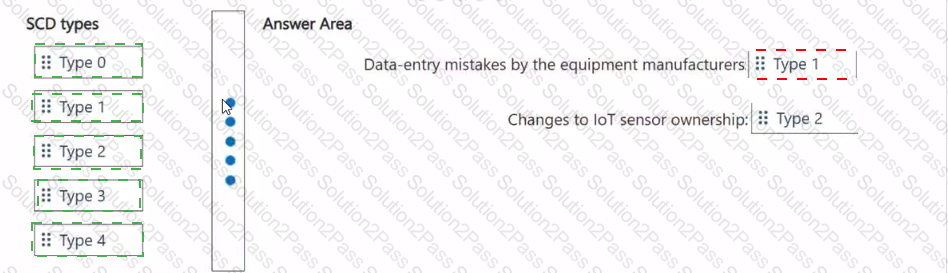
You need to configure compute for the ingestion of telemetry data. The solution must meet the data ingestion and processing requirements.
What should you do?
You have an Azure Databricks workspace that contains multiple all-purpose clusters. You discover that some clusters remain idle for long periods after users finish their work. You need to reduce compute costs without affecting active workloads. What should you do?
You have an Azure Databricks workspace that is enabled for Unity Catalog and contains a managed Delta table named Payments.
Payments stores transaction data and contains a column named payment_amount of the Decimal data type.
You must enforce the following business rule:
payment_amount must be between 0 and 10,000, inclusive
You need to ensure that records that violate the rule are rejected when data is written to the Payments table.
What should you do?
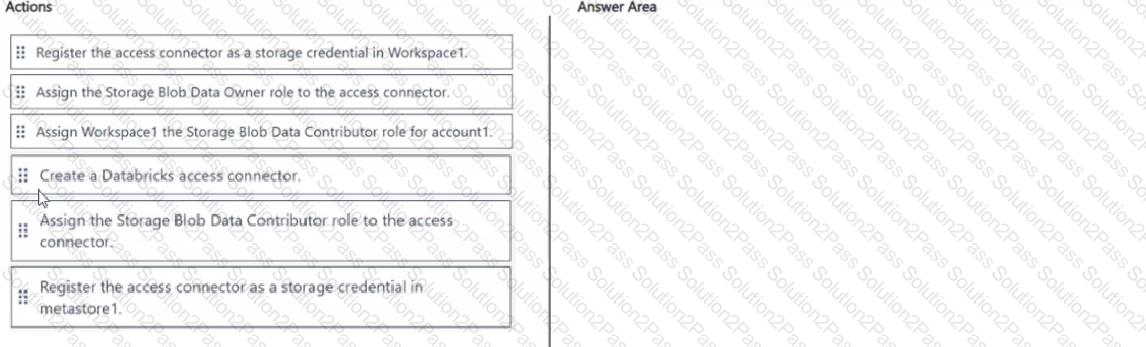
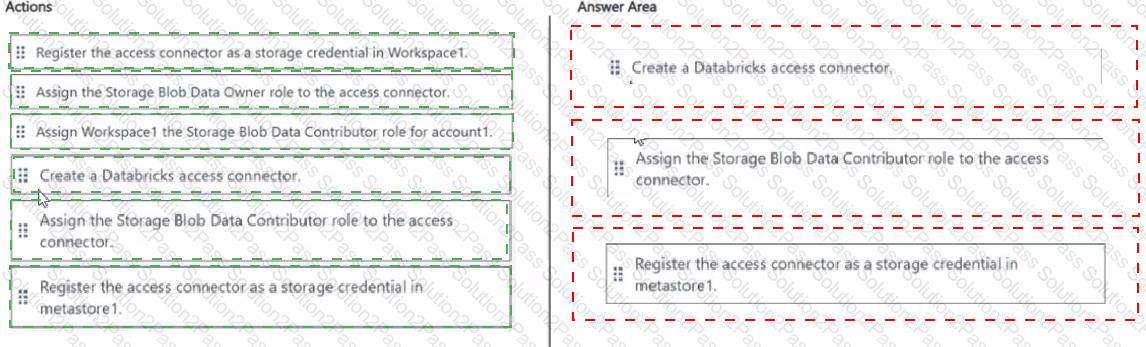
You have an Azure Databricks workspace named Workspace1 that is attached to a Unity Catalog metastore named metastore1
You need to register an Azure Storage account named account1 that has a hierarchical namespace enabled as an external location The external location must use a managed identity to authenticate to account1 and the solution must follow the principle of least privilege.
Which three actions should you perform in sequence ' To answer, move the appropriate actions from the list of actions to the answer area and arrange them in the correct order.
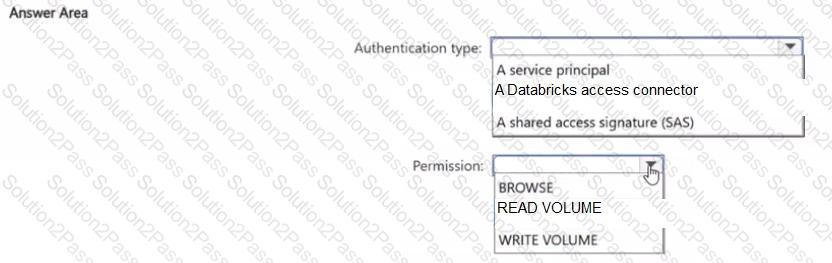
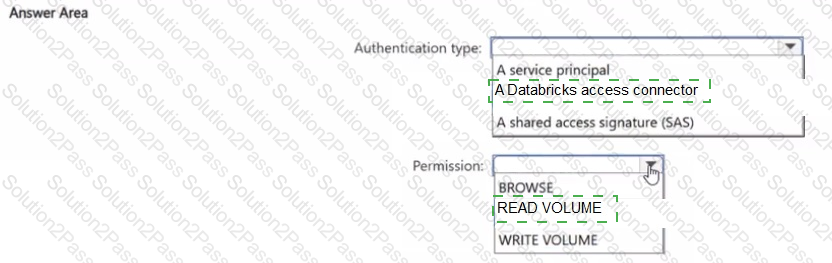
You have an Azure Databricks workspace that is enabled for Unity Catalog.
You need to create an external volume named Volume1 in an existing schema. Volume1 must expose files from an Azure Storage container. The solution must meet the following requirements:
• Ensure that authentication does NOT require storing credentials in Databricks
• Ensure that users can access the files, but NOT modify the files.
• Follow the principle of least privilege
Which type of authentication should you configure, and which permission should you grant to the users? To answer, select the appropriate options in the answer area.
NOTE: Each correct selection is worth one point.
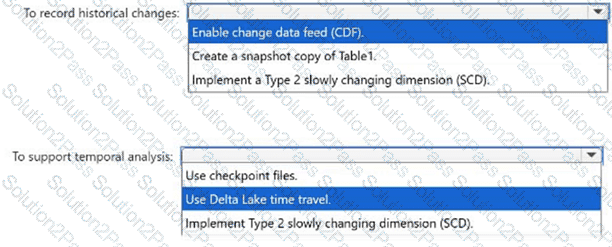
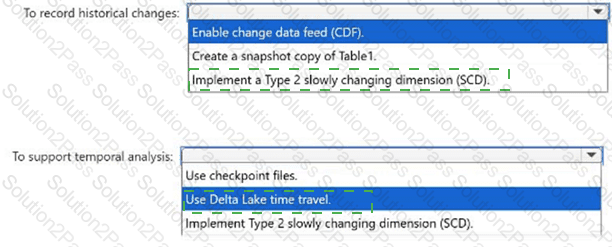
You have an Azure Databricks workspace that is enabled for Unity Catalog and contains a managed Delta table named Table1.
Table1 stores customer profile data.
Business users must analyze how customer profile records change over time. They must also be able to query earlier versions of the table.
You need to implement a solution that:
Maintains persistent historical versions of customer profile records for long-term analysis.
Allows users to query earlier versions of the Delta table.
Minimizes maintenance effort.
What should you do? To answer, select the appropriate options in the answer area.
NOTE: Each correct selection is worth one point.
You have a Lakeflow Spark Declarative Pipelines {SDP) pipeline in Azure Databricks. The pipeline ingests transaction data into a table named Table1.
You need to ensure that in the event of an invalid record, the pipeline continues to run. The solution must meet the following requirements:
• Invalid records must NOT be written to Table 1.
• Invalid records must be preserved for review.
• Minimize development effort
What should you do?