SC-500 Microsoft Certified: Cloud and AI Security Engineer Associate Free Practice Exam Questions (2026 Updated)
Prepare effectively for your Microsoft SC-500 Microsoft Certified: Cloud and AI Security Engineer Associate certification with our extensive collection of free, high-quality practice questions. Each question is designed to mirror the actual exam format and objectives, complete with comprehensive answers and detailed explanations. Our materials are regularly updated for 2026, ensuring you have the most current resources to build confidence and succeed on your first attempt.
You need to implement the function apps to meet the technical requirements.
Which apps should you include in the implementation?
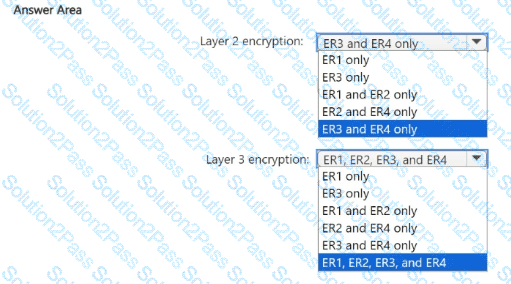
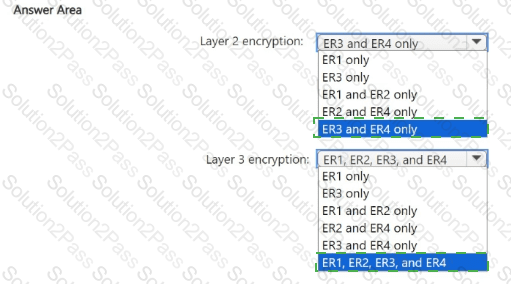
You need to recommend an encryption solution for the planned ExpressRoute implementation. The solution must meet the technical requirements.
Which ExpressRoute circuit should you recommend for each type of encryption? To answer, select the appropriate options in the answer area.
NOTE: Each correct selection is worth one point.

You need to implement the planned change for storage2. The solution must meet the technical requirements for storage encryption.
What should you do?
You need to delegate a user to implement the planned change for Defender for Cloud. The solution must follow the principle of least privilege.
Which user should you choose?
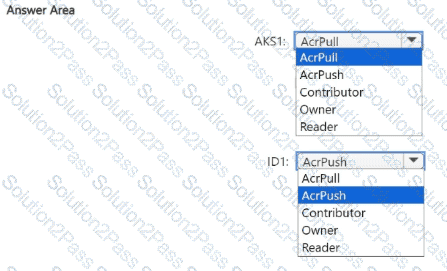
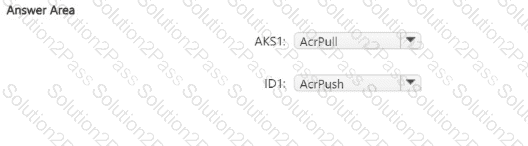
You need to configure the AKS1 and ID1 managed identities to meet the technical requirements. The solution must follow the principle of least privilege.
Which role should you assign to each identity? To answer, select the appropriate options in the answer area.
NOTE: Each correct selection is worth one point.
You have an Azure API Management instance named APIM1.
You have a partner company that accesses an API in APIM1 by using subscription keys.
A backend API key is stored in a named value in APIM1.
Microsoft Defender for Cloud generates the following recommendation: “API Management secret named values should be stored in Azure Key Vault.”
You need to address the recommendation.
What should you do first?
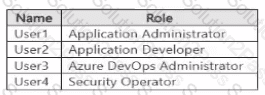
You have a Microsoft Entra tenant named contoso.com that contains the users shown in the following table.
You add enterprise applications to contoso.com as shown in the following table.
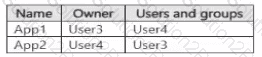
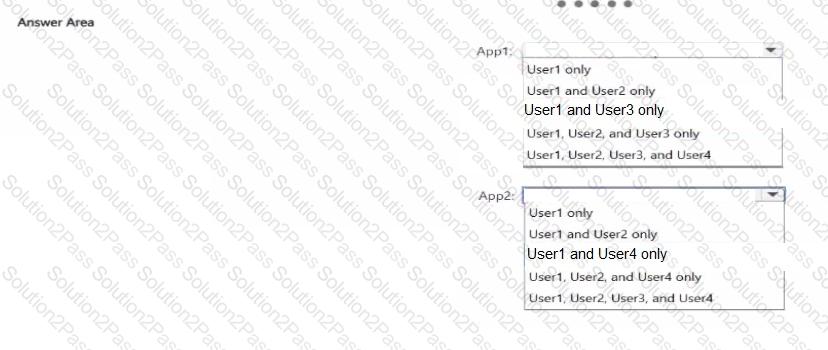
You need to identity which users can grant admin consent for App1 and App2.
Which users should you identity for each application? To answer, select the appropriate options in the answer area.
NOTE: Each correct selection is worth one point.

You have an Azure subscription.
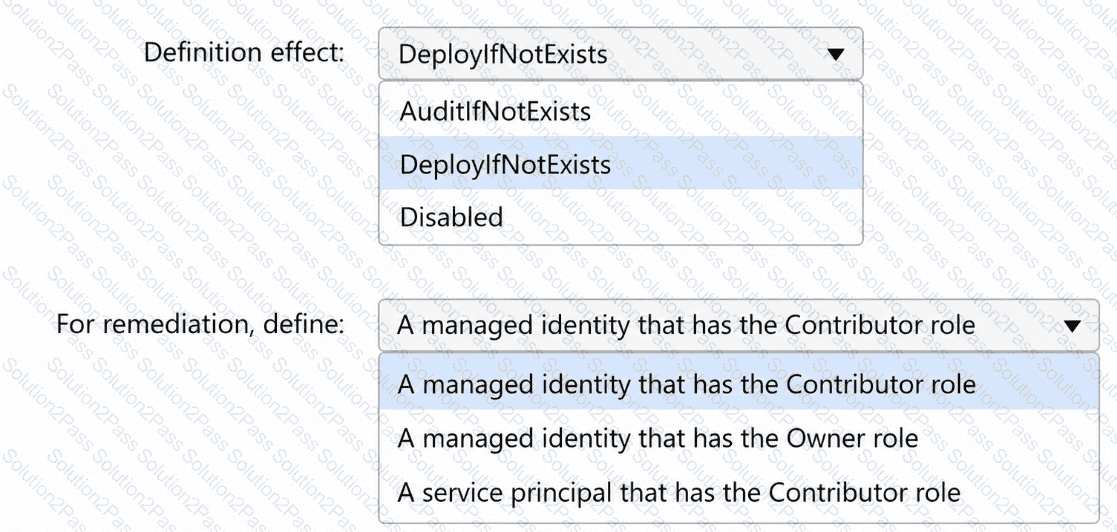
You need to create and deploy an Azure policy that meets the following requirements:
•When a new virtual machine is deployed, automatically install a custom security extension.
•Trigger an autogenerated remediation task for non-compliant virtual machines to install the extension.
What should you include in the policy? To answer, select the appropriate options in the answer area.
NOTE: Each correct selection is worth one point.


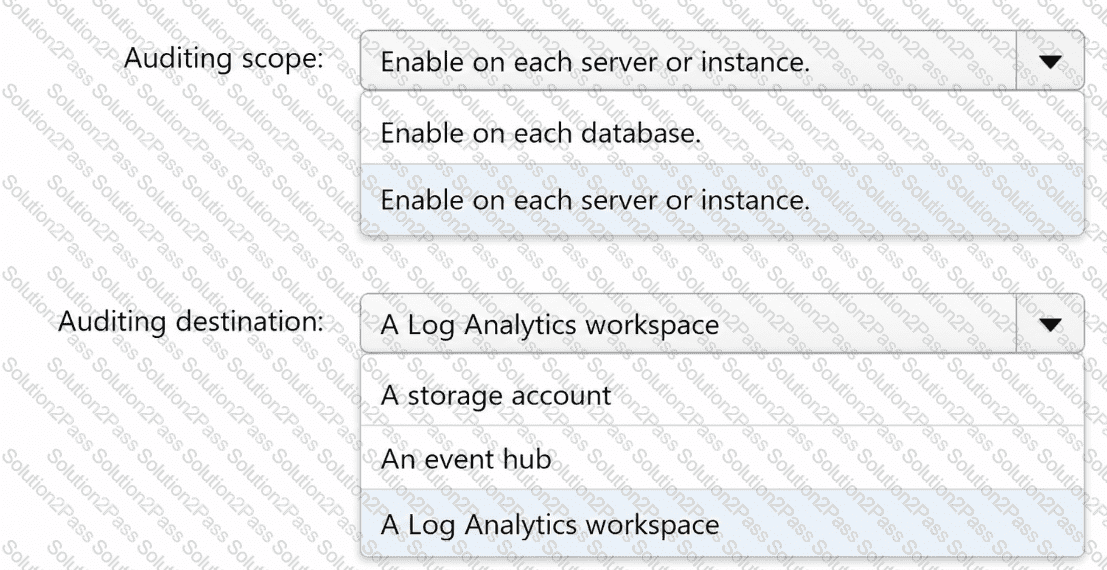
You have an Azure subscription that contains the following resources:
•An Azure SQL Database logical server named Server1 that contains a database named DB1
•An Azure SQL Managed Instance named Instance1 that contains a database named DB2
You need to configure database auditing. The solution must meet the following requirements:
•Ensure that audit data is centrally available in a location that supports for KQL queries.
•Minimize ongoing administrative effort as additional databases are added.
What should you configure? To answer, select the appropriate options in the answer area.
NOTE: Each correct selection is worth one point.


You have an Azure Kubernetes Service (AKS) cluster that will connect to an Azure Container Registry.
You need to use the automatically generated service principal for the AKS cluster to authenticate to the Azure Container Registry.
What should you create?
You have an Azure subscription that contains the following servers:
•200 virtual machines that run either Windows Server or Ubuntu Server
•50 Azure Arc enabled servers
You use Azure Policy to manage compliance across all the servers.
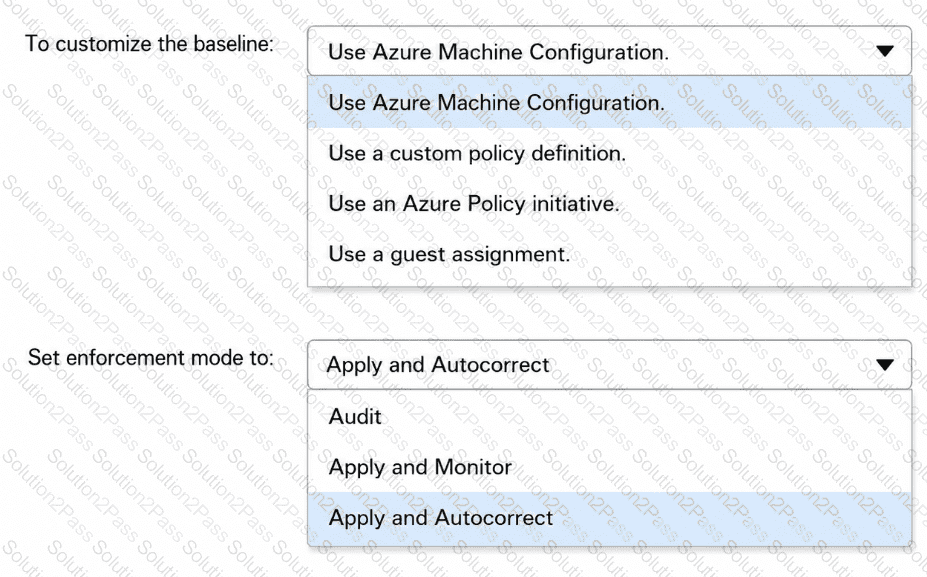
You need to enforce an organization-specific security baseline. The solution must meet the following requirements:
•Customize a built-in security baseline.
•Ensure that configuration changes to the servers are enforced automatically after the security baseline is deployed.
♦Minimize administrative effort.
What should you do? To answer, select the appropriate options in the answer area.
NOTE: Each correct selection is worth one point.


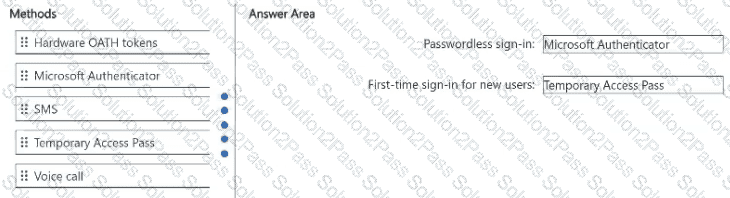
You have a Microsoft Entra tenant.
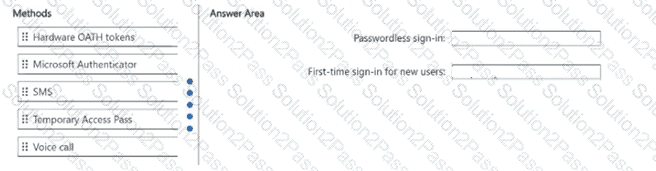
You need to implement password less authentication. The solution must meet the following requirements:
•Users can sign in without a password by using a mobile device.
•New users that sign in for the first time must use a helpdesk issued sign in method that expires.
Which authentication method should you enable for each requirement? To answer, drag the appropriate methods to the correct requirements. Each method may be used once, more than once, or not at all. You may need to drag the split bar between panes or scroll to view content.
NOTE: Each correct selection is worth one point.

HOTSPOT
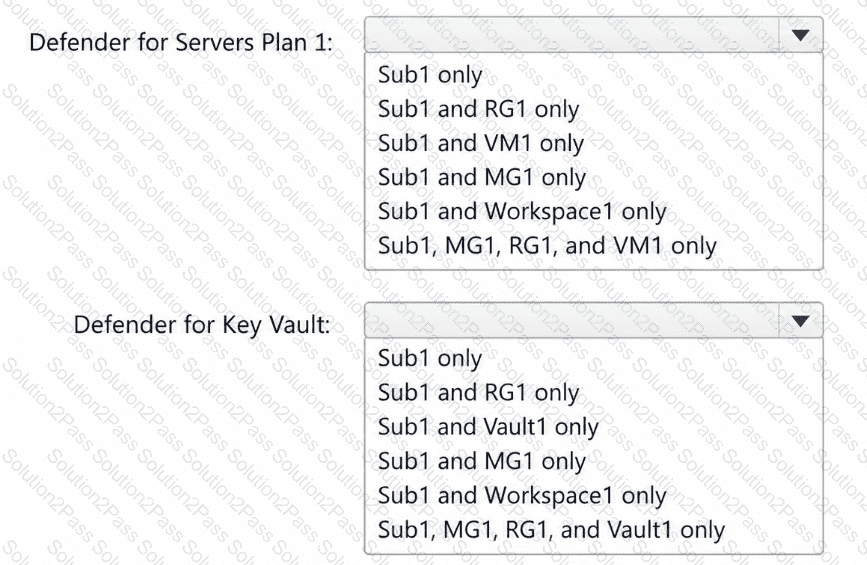
You have a management group named MG1 that contains an Azure subscription named Sub1. Sub1 contains:
RG1 — Resource group
VM1 — Virtual machine
Vault1 — Azure Key Vault
Workspace1 — Log Analytics workspace
You need to protect the resources in Sub1 by using Microsoft Defender for Servers Plan 1 and Microsoft Defender for Key Vault.
From the Azure portal, on which resources can you enable each Defender plan?

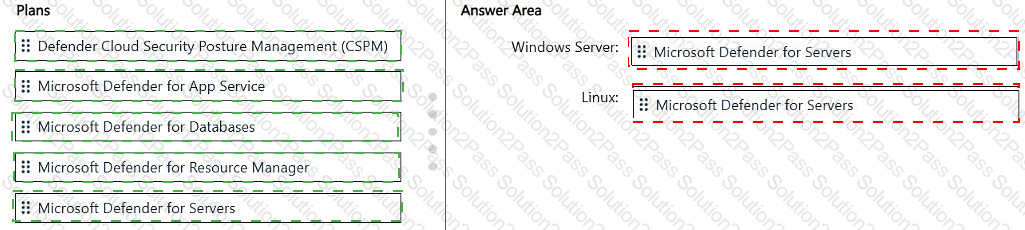
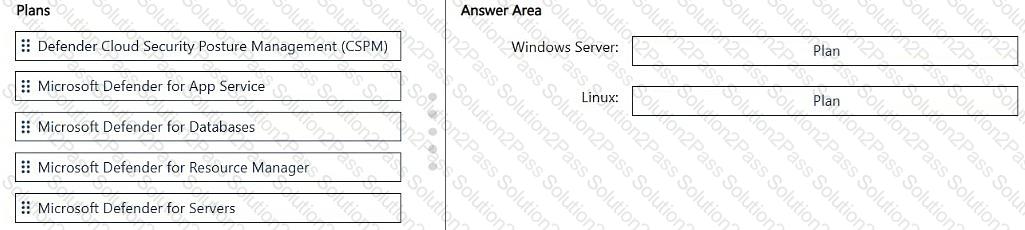
You have an Azure subscription named Sub1. Sub1 contains 60 virtual machines that run either Window Server or Linux.
All the Windows Server virtual machines host line-of-business (LOB) applications and all the Linux virtual machines host backend databases.
You need to enable malware protection for the virtual machines.
Which Microsoft Defender for Cloud plan should you enable for each type of virtual machine? To answer, drag the appropriate plans to the correct virtual machine types. Each plan may be used once, more than once, or not at all. You may need to drag the split bar between panes or scroll to view content.
NOTE: Each correct selection is worth one point.

You have an Azure API Management instance named APIM1 that publishes an API named OrdersAPI. Applications call OrdersAPI by using Microsoft Entra access tokens.
A security review finds that requests that do NOT contain a valid access token can still be forwarded to OrdersAPI.
You need to ensure that APIM1 rejects requests that do NOT contain a valid Microsoft Entra token before the requests reach OrdersAPI.
What should you configure?
You have an Azure virtual network named VNet1 that contains a subnet named Subnet! A network security group named NSG1 is associated with Subnet1.
Vou have a storage account named storage1.
You need to ensure that access from Subnet1 to storage! uses a private IP address in Subnet1 and ran be filtered by NSG1 Public network access to storage1 must be disabled.
What should you create?
You have an Azure Container Registry named ContReg1 that contains a container Image named image1.
You enable content trust for ContReg1.
After content trust is enabled, you push two images to ContReg1 as shown in the following table.

Which images ate trusted images?
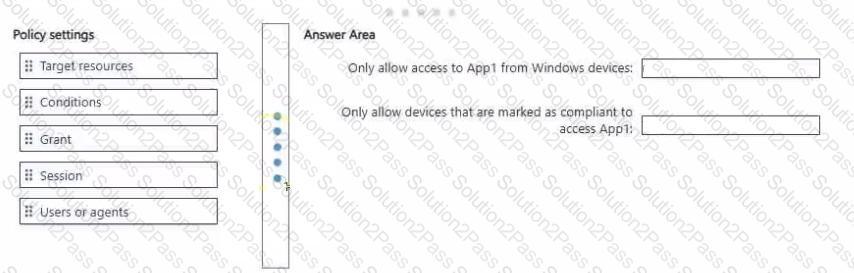
You have an Azure subscription that contains an Azure app service web app named Appl.
You plan to configure a Conditional Access policy for App1. The solution must meet the following requirements:
• Only allow access to App1 from Windows devices.
• Only allow devices that are marked as compliant to access Appl.
Which Conditional Access policy settings should you configure? To answer, drag the appropriate settings to the correct requirements- Each setting may be used once, more than once, or not at all. You may need to drag the split bar between panes or scroll to view content.
NOTE: Each correct selection is worth one point.
HOTSPOT
You have an Azure subscription that contains a virtual network named VNet1 with the following subnets:
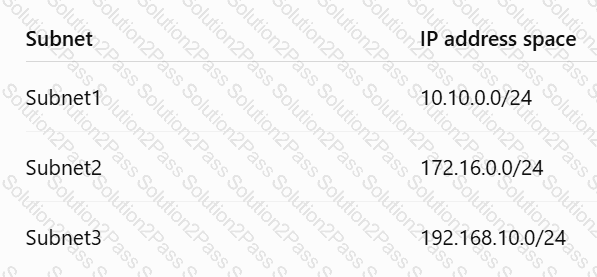
The subscription contains:
VM1 → Subnet1
VM2 → Subnet2
VM3 → Subnet3
VM3 contains a service that listens on port 8080.
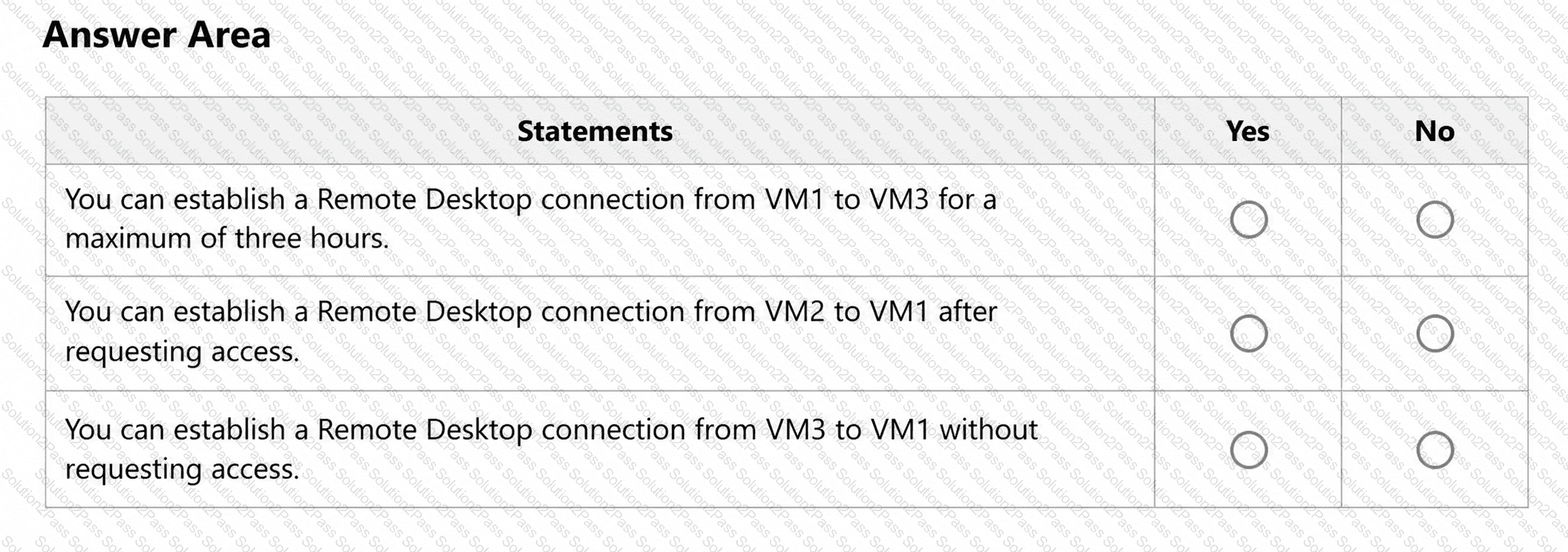
For VM1, you configure Just-in-Time (JIT) VM access:
Port 3389: allowed source IPs 10.10.0.0/24, 192.168.10.0/24, maximum 3 hours
Port 8080: source IPs Per request, maximum 5 hours
For each statement, select Yes if the statement is true. Otherwise, select No.

You have an Azure subscription that contains the resources shown in the following table.
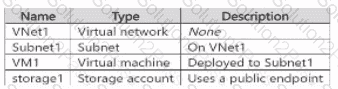
VM1 contains an application that accesses storage1. Another application accesses storage1 from a public IP address of 131.107.10.20.
For storage1, you set Public network access to Enabled from selected virtual networks and IP addresses. You add an IP network rule for 131.107.10.20.
After the configuration, only connections from 131.107.10.20 succeed.
You need to ensure that both VM1 and 131.107.10.20 can access storage1 over the public endpoint, while preventing all other access.
What should you do?