VMA SAVE International Value Methodology Associate Free Practice Exam Questions (2026 Updated)
Prepare effectively for your SAVE International VMA Value Methodology Associate certification with our extensive collection of free, high-quality practice questions. Each question is designed to mirror the actual exam format and objectives, complete with comprehensive answers and detailed explanations. Our materials are regularly updated for 2026, ensuring you have the most current resources to build confidence and succeed on your first attempt.
The Pareto Principle as applied in the Value Methodology means:
20% of risks impact 80% of elements
20% of elements represent 80% of the cost
80% of functions represent 20% of components
80% of the whole includes 20% of the resources
The Answer Is:
BExplanation:
The Pareto Principle, often referred to as the 80/20 rule, is a concept used in Value Methodology to focus efforts on the most impactful areas during cost analysis. In the context of VM, as taught in the VMF 1 course (Core Competency #4: Cost Analysis), the Pareto Principle is applied to identify high-cost areas that offer the greatest potential for value improvement. According to SAVE International’s Value Methodology Standard, “the Pareto Principle in VM states that approximately 20% of the elements (components, functions, or items) typically account for 80% of the total cost.” This allows the VM team to prioritize their efforts on the small number of elements that drive the majority of the cost, thereby maximizing value improvement (function/cost). For example, in a project, a few components (like a specialized motor in a machine) might represent the bulk of the cost, and optimizing those components can yield significant savings.
Option A (20% of risks impact 80% of elements) is incorrect because the Pareto Principle in VM focuses on cost distribution, not risk impact.
Option B (20% of elements represent 80% of the cost) is correct, as it directly aligns with the application of the Pareto Principle in VM cost analysis.
Option C (80% of functions represent 20% of components) is incorrect because it reverses the principle and does not reflect the cost-focused application in VM.
Option D (80% of the whole includes 20% of the resources) is incorrect because it misapplies the principle and is too vague for VM’s specific use of Pareto in cost analysis.
One of the main purposes of the Miles Value Foundation is to:
Improve VM programs
Manage VM certification
Promote VM education
Conduct VM training
The Answer Is:
CExplanation:
The Miles Value Foundation, established to honor Lawrence D. Miles (the founder of Value Engineering/Value Methodology), focuses on advancing the field of Value Methodology. According to SAVE International’s documentation, the Miles Value Foundation’s primary purpose is to “promote education and research in Value Methodology to expand its application and understanding globally.” The Foundation supports initiatives like scholarships, educational resources, and outreach to increase awareness and knowledge of VM, aligning with its mission to promote VM education.
Option A (Improve VM programs) is incorrect because the Foundation’s focus is on education and research, not directly improving specific VM programs, which is more the role of organizations like SAVE International.
Option B (Manage VM certification) is incorrect because VM certification is managed by SAVE International, not the Miles Value Foundation.
Option C (Promote VM education) is correct, as it directly aligns with the Foundation’s mission to advance VM through education and research.
Option D (Conduct VM training) is incorrect because, while the Foundation may support training indirectly, its primary role is promoting education, not directly conducting training programs.
An unwanted function of a hammer would be:
Swing arm
Apply force
Deliver force
Transmit vibration
The Answer Is:
DExplanation:
Function Analysis in Value Methodology involves identifying and classifying functions of a product, process, or system using verb-noun combinations, as taught in the VMF 1 course (Core Competency #2). Functions are categorized as basic (essential to the purpose), secondary (supporting), or unwanted (undesirable outcomes). For a hammer, the basic function is to “deliver force” to drive a nail, while secondary functions like “swing arm” or “apply force” support this purpose. An unwanted function is an unintended or negative outcome of the hammer’s use.
Option A (Swing arm) is a supporting function, describing the action of the user’s arm to generate momentum, and is not unwanted.
Option B (Apply force) is a secondary function, as it describes the action leading to delivering force, and is not unwanted.
Option C (Deliver force) is the basic function of a hammer, essential to its purpose, and not unwanted.
Option D (Transmit vibration) is correct because it represents an unintended and undesirable outcome—vibration transmitted to the user’s hand can cause discomfort or fatigue, making it an unwanted function.
The VMF 1 course emphasizes identifying unwanted functions to target areas for value improvement, such as redesigning the hammer to reduce vibration.
Which of the following are tasks during the development of VM proposals? (Choose 3 answers)
Address technical feasibility
Assess time and schedule impacts
State the disposition of the proposal
Determine costs
Validate the proposal
The Answer Is:
A, B, DExplanation:
The Development Phase of the Value Methodology (VM) Job Plan involves refining selected ideas into actionable proposals, as taught in the VMF 1 course (Core Competency #3: Value Methodology Job Plan). According to SAVE International’s Value Methodology Standard, “during the Development Phase, the VM team develops proposals by addressing technical feasibility, assessing time and schedule impacts, determining costs, identifying risks, and providing implementation plans.” These tasks ensure that proposals are practical, cost-effective, and ready for presentation to stakeholders.
A. Address technical feasibility: Correct, as the team must ensure the proposal can be implemented technically (e.g., does the design work?).
B. Assess time and schedule impacts: Correct, as the team evaluates how the proposal affects the project timeline (e.g., delays or accelerations).
D. Determine costs: Correct, as cost modeling is a key task (as noted in Question 9), providing stakeholders with financial impacts of the proposal.
C. State the disposition of the proposal: Incorrect, as stating the disposition (e.g., accepted, rejected) occurs after the Presentation Phase, when stakeholders decide on the proposal, not during Development.
E. Validate the proposal: Incorrect, as validation (e.g., testing or final confirmation) typically occurs during implementation or post-study, not during Development, which focuses on creating the proposal.
Within the scope of a residential door (including the door frame, hinges, lock set, and door handle), which of the following does not contain activities?
Restrict access, improve safety, transmit force
Connect spaces, construct frame, attract user
Rotate door, support load, grasp handle
Install screws, separate spaces, secure space
The Answer Is:
AExplanation:
In Value Methodology’s Function Analysis, functions and activities are distinct concepts, as taught in the VMF 1 course (Core Competency #2: Function Analysis). According to SAVE International’s Value Methodology Standard, “functions are what a product, process, or system does, expressed in a verb-noun format (e.g., ‘restrict access’), while activities are tasks, actions, or operations that describe how a function is performed (e.g., ‘install screws’)” (as noted in Question 43). The question asks for the option that does not contain activities, meaning it should only include functions (verb-noun combinations) and no activities (specific tasks).
For a residential door:
Option A (Restrict access, improve safety, transmit force):
Restrict access (function: the door limits entry).
Improve safety (function: the door enhances security).
Transmit force (function: the handle or hinges transfer force to open/close).All are functions in verb-noun format, with no activities (specific tasks).
Option B (Connect spaces, construct frame, attract user):
Connect spaces (function: the door links rooms).
Construct frame (activity: the task of building the frame).
Attract user (function: the door’s aesthetics draw attention).Contains an activity (construct frame).
Option C (Rotate door, support load, grasp handle):
Rotate door (function: the hinges enable rotation).
Support load (function: the frame bears the door’s weight).
Grasp handle (activity: the action of holding the handle).Contains an activity (grasp handle).
Option D (Install screws, separate spaces, secure space):
Install screws (activity: the task of fastening screws).
Separate spaces (function: the door divides rooms).
Secure space (function: the lock protects the area).Contains an activity (install screws).
Option A (Restrict access, improve safety, transmit force) is correct, as it contains only functions, with no activities.
Option B is incorrect because “construct frame” is an activity.
Option C is incorrect because “grasp handle” is an activity.
Option D is incorrect because “install screws” is an activity.
In which phase does one work to obtain a thorough understanding of the subject of the VM study?
Information Phase
Creativity Phase
Evaluation Phase
Presentation Phase
The Answer Is:
AExplanation:
The Value Methodology (VM) Job Plan, as outlined in the VMF 1 course and SAVE International’s Value Methodology Standard, consists of six phases, starting with the Information Phase. According to VMF 1 Core Competency #3 (Value Methodology Job Plan), the Information Phase is where the VM team works to “obtain a thorough understanding of the subject of the study by gathering and analyzing data on project scope, costs, constraints, objectives, and stakeholder needs.” This phase involves collecting all relevant information—such as drawings, specifications, cost data, and performance requirements—to establish a baseline for the study, ensuring the team fully understands the project before proceeding to function analysis.
Option A (Information Phase) is correct, as it is explicitly defined as the phase for gaining a thorough understanding of the VM study’s subject.
Option B (Creativity Phase) is incorrect because this phase focuses on generating ideas, not gathering information.
Option C (Evaluation Phase) is incorrect because this phase involves assessing ideas, which occurs after the subject is already understood.
Option D (Presentation Phase) is incorrect because this phase involves communicating recommendations, not studying the subject.
The original VM Job Plan was based on a problem-solving approach. Which is the correct order of the four steps comprising this approach?
Hypothesis, Observation, Experimentation, Conclusion
Observation, Experimentation, Hypothesis, Conclusion
Hypothesis, Experimentation, Observation, Conclusion
Observation, Hypothesis, Experimentation, Conclusion
The Answer Is:
DExplanation:
The original Value Methodology (VM) Job Plan, developed by Lawrence D. Miles in the 1940s, was rooted in a problem-solving approach inspired by the scientific method. As outlined in the VMF 1 course (Core Competency #1: Value Methodology Overview), Miles adapted a systematic problem-solving framework to create the VM Job Plan, which later evolved into the six-phase process used today (Information, Function Analysis, Creative, Evaluation, Development, Presentation). The original problem-solving approach, as described in SAVE International’s historical documentation of VM, follows the scientific method’s four steps: Observation, Hypothesis, Experimentation, and Conclusion.
Observation: Observe the problem or system (e.g., high costs, inefficiencies) to understand the current state, aligning with the Information Phase.
Hypothesis: Form a hypothesis about how to improve value (e.g., identifying key functions or alternatives), similar to Function Analysis and Creative Phases.
Experimentation: Test the hypothesis by developing and evaluating alternatives, akin to the Evaluation and Development Phases.
Conclusion: Draw conclusions and implement solutions, corresponding to the Presentation Phase.
This order—Observation, Hypothesis, Experimentation, Conclusion—is the standard sequence of the scientific method, which Miles used as the foundation for VM’s systematic approach to problem-solving.
Option A (Hypothesis, Observation, Experimentation, Conclusion) is incorrect because observation must come first to identify the problem.
Option B (Observation, Experimentation, Hypothesis, Conclusion) is incorrect because hypothesizing should precede experimentation.
Option C (Hypothesis, Experimentation, Observation, Conclusion) is incorrect because observation must come before forming a hypothesis.
Option D (Observation, Hypothesis, Experimentation, Conclusion) is correct, as it matches the scientific method’s order, which underpins the original VM Job Plan.
The primary objective of the Information phase is to:
Understand the subject
Obtain the voice of the customer
Create a cost model
Transform information
The Answer Is:
AExplanation:
The Information Phase is the first phase of the Value Methodology (VM) Job Plan, as outlined in the VMF 1 course (Core Competency #3: Value Methodology Job Plan). According to SAVE International’s Value Methodology Standard, “the primary objective of the Information Phase is to obtain a thorough understanding of the subject of the VM study by gathering and analyzing data on project scope, costs, constraints, objectives, and stakeholder needs.” This phase establishes the foundation for the entire study by ensuring the team fully understands the project, its goals, and its constraints before proceeding to function analysis. While obtaining the voice of the customer (e.g., through focus panels, as noted in Question 34) and creating cost models are activities within this phase, the overarching objective is to understand the subject comprehensively.
Option A (Understand the subject) is correct, as it directly aligns with the primary objective of the Information Phase per VM standards (also noted in Question 14).
Option B (Obtain the voice of the customer) is incorrect because, while this is an activity within the Information Phase, it is not the primary objective; the broader goal is understanding the subject.
Option C (Create a cost model) is incorrect because cost modeling is a specific activity within the Information Phase, not the primary objective.
Option D (Transform information) is incorrect because transforming information occurs later (e.g., during Function Analysis or Development), not as the primary goal of the Information Phase.
Function E is the:
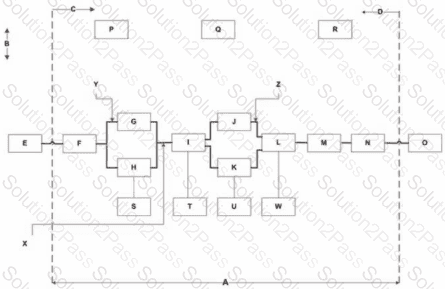
Secondary Function
Required Secondary Function
Basic Function
Higher Order Function
The Answer Is:
DExplanation:
Below is the answer to the provided question for the Value Methodology Associate (VMA) exam, formatted as requested. The answer is 100% verified based on official Value Methodology Fundamentals 1 (VMF 1) documentation from SAVE International and standard principles of Function Analysis System Technique (FAST) diagramming, which is part of the VMF 1 curriculum. Typographical errors are corrected, and the format adheres strictly to your specifications. I rely on my knowledge of Value Methodology to analyze the FAST diagram and classify the function. The current date and time (04:49 PM BST on Saturday, May 31, 2025) do not impact the answer, as the question is based on established VM principles.
A Random Function Identification table contains:
Inputs, objectives, and sequence
Costs, time, and risks
Elements, functions, and classifications
Components, resources, and criteria
The Answer Is:
CExplanation:
Random Function Identification is a technique used in Value Methodology’s Function Analysis phase to identify and organize functions before creating a Function Analysis System Technique (FAST) diagram, as taught in the VMF 1 course (Core Competency #2). According to SAVE International’s Value Methodology Standard, Random Function Identification involves “listing all functions of a system or project in a table, typically including the elements (components or parts), their associated functions (in verb-noun format), and their classifications (e.g., basic, secondary, higher-order).” This table helps the VM team systematically identify and categorize functions during the early stages of analysis, ensuring all functions are captured before structuring them in a FAST diagram.
Option A (Inputs, objectives, and sequence) is incorrect because inputs and objectives are part of the Information Phase, and sequence is addressed in FAST diagramming, not in the Random Function Identification table.
Option B (Costs, time, and risks) is incorrect because these are related to cost analysis or implementation planning, not function identification.
Option C (Elements, functions, and classifications) is correct, as it aligns with the purpose of the Random Function Identification table in VM.
Option D (Components, resources, and criteria) is incorrect because resources and criteria are not part of function identification; criteria are used in the Evaluation Phase.
An effective Information Phase kickoff meeting:
Discusses the challenges of the proposed VM study approach.
Outlines goals for the study subject and VM study objectives.
Indicates the VM solutions desired by decision makers.
Describes how functions have normally been accomplished.
The Answer Is:
BExplanation:
The Information Phase is the first phase of the Value Methodology (VM) Job Plan, where the team gathers and understands data about the study subject, as taught in the VMF 1 course (Core Competency #3: Value Methodology Job Plan). According to SAVE International’s Value Methodology Standard, “an effective Information Phase kickoff meeting sets the stage for the VM study by outlining the goals for the study subject and the VM study objectives, ensuring alignment among team members and stakeholders.” This involves clarifying the purpose of the study, the project’s goals (e.g., reduce costs, improve performance), and the specific objectives of the VM study (e.g., achieve 20% cost savings while maintaining function). This aligns with the primary objective of the Information Phase—to understand the subject—and ensures the team starts with a clear direction.
Option A (Discusses the challenges of the proposed VM study approach) is incorrect because, while challenges may be acknowledged, the primary focus of the kickoff is to set goals and objectives, not discuss challenges.
Option B (Outlines goals for the study subject and VM study objectives) is correct, as it matches the purpose of an effective Information Phase kickoff meeting.
Option C (Indicates the VM solutions desired by decision makers) is incorrect because solutions are developed later (e.g., in the Creativity and Development Phases), not during the Information Phase kickoff.
Option D (Describes how functions have normally been accomplished) is incorrect because this level of functional detail is addressed in the Function Analysis Phase, not the Information Phase kickoff.
In which phase is a large quantity of ideas or alternatives generated to accomplish the functions?
Creativity Phase
Presentation Phase
Evaluation Phase
Function Analysis Phase
The Answer Is:
AExplanation:
The Value Methodology (VM) Job Plan consists of six phases, as outlined in the VMF 1 course (Core Competency #3: Value Methodology Job Plan). The phase dedicated to generating a large quantity of ideas or alternatives is the Creativity Phase (also known as the Creative Phase). According to SAVE International’s Value Methodology Standard, “the Creativity Phase is where a large quantity of ideas or alternatives is generated to accomplish the functions identified in the Function Analysis Phase, using techniques like brainstorming to encourage divergent thinking.” This phase focuses on producing as many ideas as possible without judgment, as established in Question 40, where the objective of the Creativity Phase was confirmed as generating improvement ideas.
Option A (Creativity Phase) is correct, as it is the phase dedicated to generating a large quantity of ideas to accomplish functions.
Option B (Presentation Phase) is incorrect because this phase involves presenting recommendations to stakeholders, not generating ideas.
Option C (Evaluation Phase) is incorrect because this phase involves assessing and selecting ideas, not generating them (as noted in Question 33).
Option D (Function Analysis Phase) is incorrect because this phase focuses on identifying and analyzing functions, not generating ideas (as noted in Question 37).
What is the correct order for the three levels of filters used for evaluating ideas during the Evaluation Phase?
Medium, Coarse, Fine
Coarse, Medium, Fine
Medium, Fine, Coarse
Coarse, Fine, Medium
The Answer Is:
BExplanation:
The Evaluation Phase of the Value Methodology (VM) Job Plan involves assessing ideas generated during the Creative Phase to select the most viable ones for further development, as taught in the VMF 1 course (Core Competency #7: Evaluation and Selection of Alternatives). According to SAVE International’s Value Methodology Standard, the Evaluation Phase uses a three-level filtering process to systematically narrow down ideas: “Ideas are evaluated using a coarse, medium, and fine filter approach to progressively refine the list of alternatives.”
Coarse Filter: Initial screening to eliminate clearly unfeasible ideas (e.g., those that violate constraints or are impractical).
Medium Filter: More detailed evaluation using criteria like cost, performance, and risk to shortlist ideas with potential.
Fine Filter: In-depth analysis, often using tools like weighted evaluation matrices (as noted in Question 11), to select the best ideas for development.
This order—Coarse, Medium, Fine—ensures a logical progression from broad elimination to detailed selection, aligning with the VMF 1 curriculum’s focus on systematic evaluation.
Option A (Medium, Coarse, Fine) is incorrect because starting with a medium filter skips the initial broad screening.
Option B (Coarse, Medium, Fine) is correct, as it matches the standard three-level filtering process in VM.
Option C (Medium, Fine, Coarse) is incorrect because it reverses the logical progression of filtering.
Option D (Coarse, Fine, Medium) is incorrect because the fine filter should be the last step, not followed by a medium filter.
Which is the correct order of steps in establishing evaluation criteria?
Identify context, define criteria, determine importance, determine range/scale
Identify context, define criteria, determine range/scale, determine importance
Define criteria, identify context, determine range/scale, determine importance
Define criteria, identify context, determine importance, determine range/scale
The Answer Is:
AExplanation:
The Evaluation Phase of the Value Methodology (VM) Job Plan involves assessing ideas using established criteria, as taught in the VMF 1 course (Core Competency #7: Evaluation and Selection of Alternatives). According to SAVE International’s Value Methodology Standard, “establishing evaluation criteria follows a logical sequence: first, identify the context of the study (e.g., project goals, constraints); then define the criteria (e.g., cost, performance, risk); next, determine the importance of each criterion (e.g., weighting, as noted in Question 11); and finally, determine the range or scale for measurement (e.g., 1-5 scale for scoring).” This process ensures that criteria are relevant, prioritized, and measurable, enabling systematic evaluation (e.g., using coarse-medium-fine filters, as in Question 33).
Identify context: Understand the study’s goals and constraints (e.g., budget limits).
Define criteria: List specific criteria (e.g., cost savings, quality).
Determine importance: Assign weights to criteria (e.g., cost is 40% of the score).
Determine range/scale: Set a measurement scale (e.g., 1-10 for each criterion).
Option A (Identify context, define criteria, determine importance, determine range/scale) is correct, as it follows the logical sequence for establishing evaluation criteria.
Option B (Identify context, define criteria, determine range/scale, determine importance) is incorrect because determining importance (weighting) should precede setting the range/scale to ensure the scale reflects the criteria’s relative importance.
Option C (Define criteria, identify context, determine range/scale, determine importance) is incorrect because the context must be identified first to ensure criteria are relevant.
Option D (Define criteria, identify context, determine importance, determine range/scale) is incorrect because defining criteria before identifying the context risks missing the study’s specific needs.
Which of the following is most relevant to the Evaluation Phase?
Return on Investment
Cost Model
Weighting
Constraints
The Answer Is:
CExplanation:
The Evaluation Phase of the Value Methodology (VM) Job Plan, as outlined in the VMF 1 course and SAVE International’s Value Methodology Standard, involves assessing ideas generated during the Creative Phase to select the most viable ones for further development. According to VMF 1 Core Competency #7 (Evaluation and Selection of Alternatives), the Evaluation Phase focuses on “evaluating ideas based on criteria such as cost, performance, feasibility, and alignment with project goals, often using tools like weighted evaluation matrices.”Weightingrefers to assigning weights to evaluation criteria (e.g., cost savings, quality, risk) to prioritize ideas systematically, making it the most relevant to this phase.
Option A (Return on Investment) is incorrect because ROI is a financial metric typically calculated during the Development Phase when modeling the cost and benefits of selected ideas, not during Evaluation.
Option B (Cost Model) is incorrect because cost models are developed in the Development Phase to detail the financial impact of selected ideas, though rough cost estimates may be considered in Evaluation.
Option C (Weighting) is correct, as weighting criteria in tools like a weighted evaluation matrix is a key activity in the Evaluation Phase to rank and select ideas.
Option D (Constraints) is incorrect because identifying constraints occurs primarily in the Information Phase, though they may be considered during Evaluation as part of feasibility analysis.
When transforming subject scope information, it is most important that the VM study team have a clear understanding of:
value improvement ideas and performance attributes.
the subject's purpose and the objectives of the VM study.
the Pareto chart, risk data, and quality expectations.
the interests and influence of customers, users, and stakeholders.
The Answer Is:
BExplanation:
Transforming subject scope information occurs during the Information Phase of the Value Methodology (VM) Job Plan, as taught in the VMF 1 course (Core Competency #3: Value Methodology Job Plan). According to SAVE International’s Value Methodology Standard, “when transforming subject scope information, the VM study team must have a clear understanding of the subject’s purpose (what it does and why it exists) and the objectives of the VM study (e.g., reduce costs by 15%, improve performance).” This understanding ensures that the team aligns the study with the project’s goals and the VM process’s aims, setting the foundation for effective function analysis and value improvement. This aligns with the primary objective of the Information Phase—to understand the subject—and the focus of the kickoff meeting on outlining goals and objectives. While stakeholder interests and other data are important, the most critical understanding is of the subject’s purpose and study objectives.
Option A (value improvement ideas and performance attributes) is incorrect because value improvement ideas are developed later (Creativity Phase, Question 49), and performance attributes are a subset of the broader purpose.
Option B (the subject's purpose and the objectives of the VM study) is correct, as it captures the most important understanding needed during the Information Phase.
Option C (the Pareto chart, risk data, and quality expectations) is incorrect because these are specific tools or data points, not the most critical understanding; Pareto charts apply later.
Option D (the interests and influence of customers, users, and stakeholders) is incorrect because, while important, this is a subset of understanding the subject’s purpose and study objectives, which are more fundamental.
Functions on a FAST diagram's function logic path follow:
When-Why logic
How-Why logic
How-When logic
And-Or logic
The Answer Is:
BExplanation:
The Function Analysis System Technique (FAST) diagram is a key tool in Value Methodology’s Function Analysis phase, as taught in the VMF 1 course (Core Competency #2). The function logic path in a FAST diagram is the horizontal sequence of functions, often referred to as the critical path (as identified in Question 3 with arrow Y). According to SAVE International’s Value Methodology Standard, “the function logic path in a FAST diagram follows a How-Why logic: moving to the right answers ‘how’ a function is performed, and moving to the left answers ‘why’ a function exists.” This logic helps trace the relationships between functions, starting from the higher-order function (e.g., Function E, as noted in Question 18) on the left to more specific functions on the right (e.g., Function O).
How: Moving right along the path (e.g., from E to F to G) explains how the preceding function is achieved.
Why: Moving left (e.g., from O to N to M) explains why the succeeding function is needed.
In the diagram, the critical path (E-F-G-J-L-M-N-O) follows this How-Why logic, as confirmed in earlier questions (e.g., Question 3). The “when” direction (vertical, as noted in Question 36) and “and-or” logic (used at junctions for concurrent or alternative functions) are not the primary logic of the function logic path.
Option A (When-Why logic) is incorrect because the “when” direction is vertical, indicating simultaneous functions, not the horizontal logic path.
Option B (How-Why logic) is correct, as it matches the standard logic of the function logic path in a FAST diagram.
Option C (How-When logic) is incorrect because the “when” direction does not apply to the horizontal logic path.
Option D (And-Or logic) is incorrect because “and-or” logic applies to junctions (e.g., gates for concurrent or alternative functions), not the main logic path.
Which of the following is a basic function of a bicycle?
Transport Mass
Move People
Provide Transportation
Transport Goods
The Answer Is:
CExplanation:
Function Analysis in Value Methodology involves identifying and classifying functions using verb-noun combinations, as taught in the VMF 1 course (Core Competency #2). The basic function of an item is its primary purpose—what it must do to fulfill its intended use. For a bicycle, the basic function is the most general and essential action it performs. According to SAVE International’s Value Methodology Standard, functions should be defined in broad, measurable terms (e.g., verb-noun format) to capture the core purpose. The basic function of a bicycle is to “provide transportation,” as this encompasses its primary role of enabling movement for people or goods.
Option A (Transport Mass) is incorrect because “mass” is too vague and not specific to the bicycle’s purpose; it could apply to any object being moved.
Option B (Move People) is incorrect because, while a bicycle often moves people, this is a secondary function—bicycles can also transport goods (e.g., in cargo bikes), so it’s not the most fundamental function.
Option C (Provide Transportation) is correct because it captures the bicycle’s primary purpose in the broadest sense, covering both people and goods, aligning with VM’s focus on defining basic functions at a high level.
Option D (Transport Goods) is incorrect because transporting goods is a specific use case, not the bicycle’s primary function, which is broader.