Mule-Dev-301 Salesforce Certified MuleSoft Developer II Free Practice Exam Questions (2026 Updated)
Prepare effectively for your Salesforce Mule-Dev-301 Salesforce Certified MuleSoft Developer II certification with our extensive collection of free, high-quality practice questions. Each question is designed to mirror the actual exam format and objectives, complete with comprehensive answers and detailed explanations. Our materials are regularly updated for 2026, ensuring you have the most current resources to build confidence and succeed on your first attempt.
A Mule API receives a JSON payload and updates the target system with the payload. The developer uses JSON schemas to ensure the data is valid.
How can the data be validated before posting to the target system?
A System API that communicates to an underlying MySQL database is deployed to CloudHub. The DevOps team requires a readiness endpoint to monitor all system APIs.
Which strategy should be used to implement this endpoint?
Which pattern should be used to invoke multiple HTTP APIs in parallel and roll back any failed requests in sequence?
Refer to the exhibit.
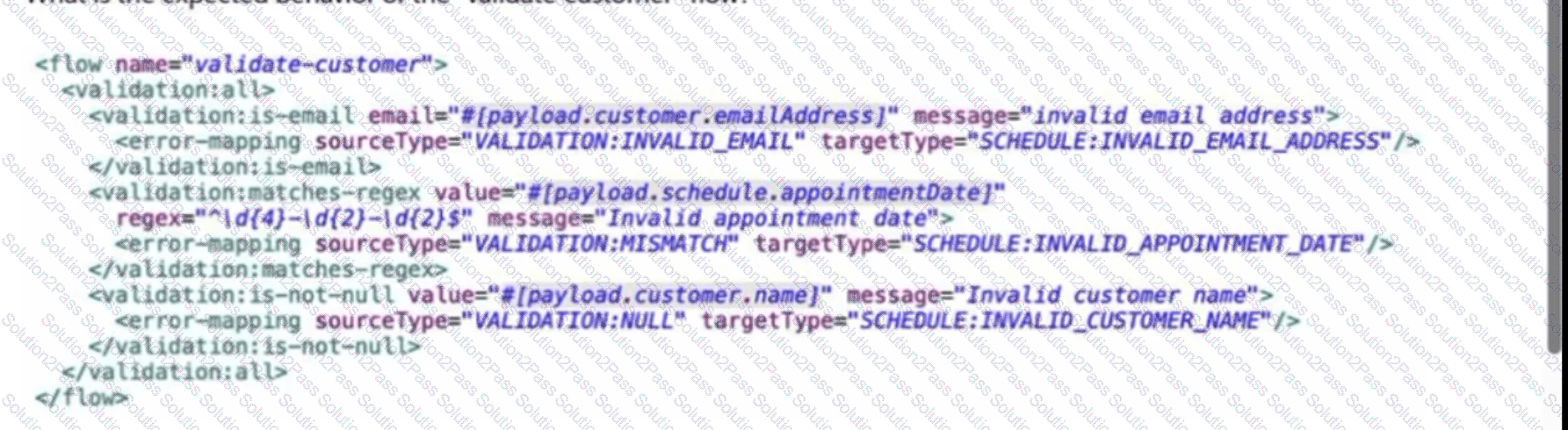
An API has been built to enable scheduling emails for a healthcare provider. The front-end system does very little data entry validation, and problems have started to appear in the emails that go out to patients. A "validate-customer" flow is added to validate the data.
What is the expected behavior of the "validate-customer" flow?
Exhibit:
Multiple individual Mule applications need to use the Mule Maven plugin to deploy to CloudHub. The plugin configuration should be reused where necessary and anything project-specific should be property-based.
Where should the Mule Maven plugin details be configured?
A scatter-gather router is configured with four routes: Route A, B, C and D.
Route C fails.
Which expression allows access to the failing route so that it can be compensated?
Which type of cache invalidation does the Cache scope support without having to write any additional code?
Refer to the exhibits.
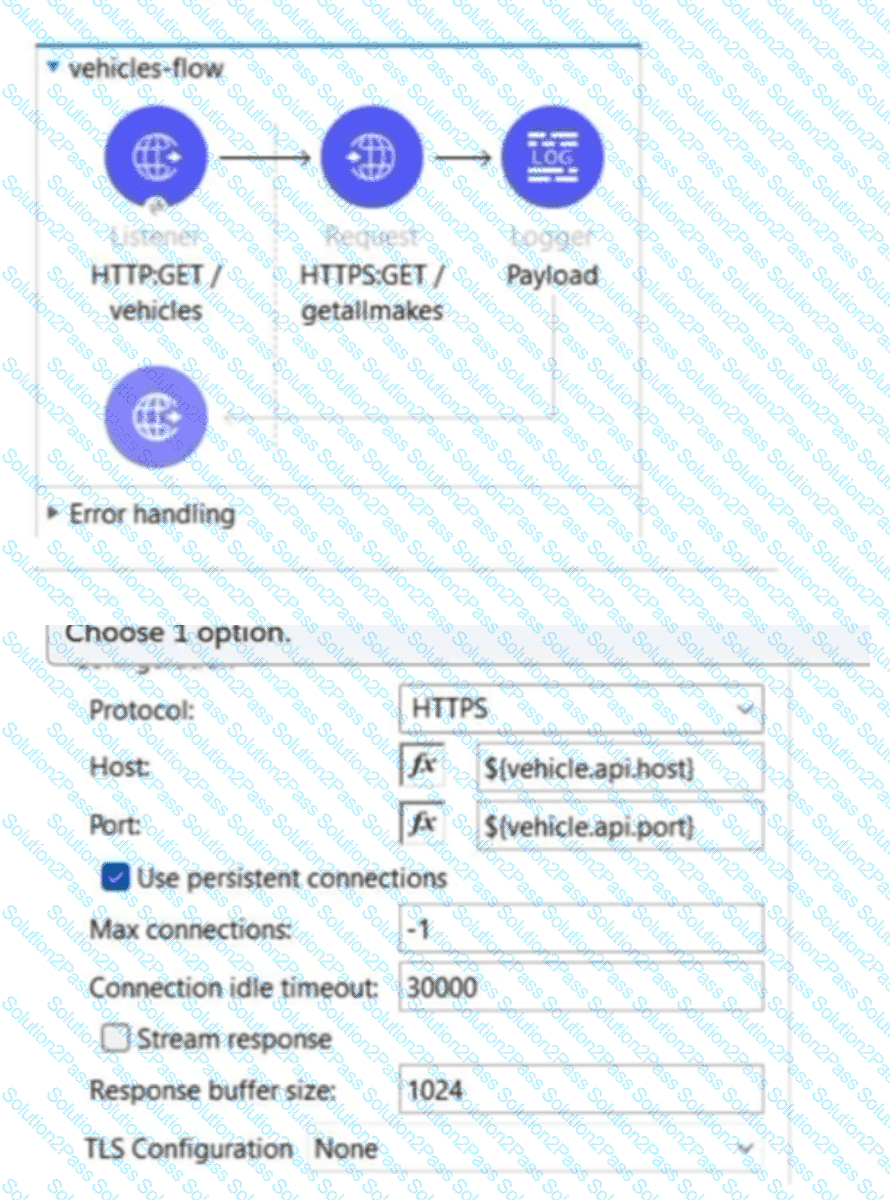
The flow is invoking a target API. The API's protocol is HTTPS. The TLS configuration in the HTTP Request Configuration global element is set to None. A web client submits a request to http://localhost:8081/vehicles.
If the certificate of the target API is signed by a certificate authority (CA), what is true about the HTTP Request operation when the flow executes?
Exhibit:
A developer deploys an API to CloudHub and applies an OAuth API policy in API Manager. During testing, the API response is slow, so the developer reconfigures the API so that the out-of-the-box HTTP Caching policy is applied first, and the OAuth API policy is applied second.
What will happen when an HTTP request is received?
An organization uses CloudHub to deploy all of its applications.
How can a common-global-error-handler flow be configured so that it can be reused across all of the organization's deployed applications?
Which properties are mandatory on the HTTP Connector configuration in order to use the OAuth 2.0 Authorization Code grant type for authentication?
A healthcare customer wants to use hospital system data, which includes code that was developed using legacy tools and methods. The customer has created reusable Java libraries in order to read the data from the system.
What is the most effective way to develop an API to retrieve the data from the hospital system?
Refer to the exhibit.
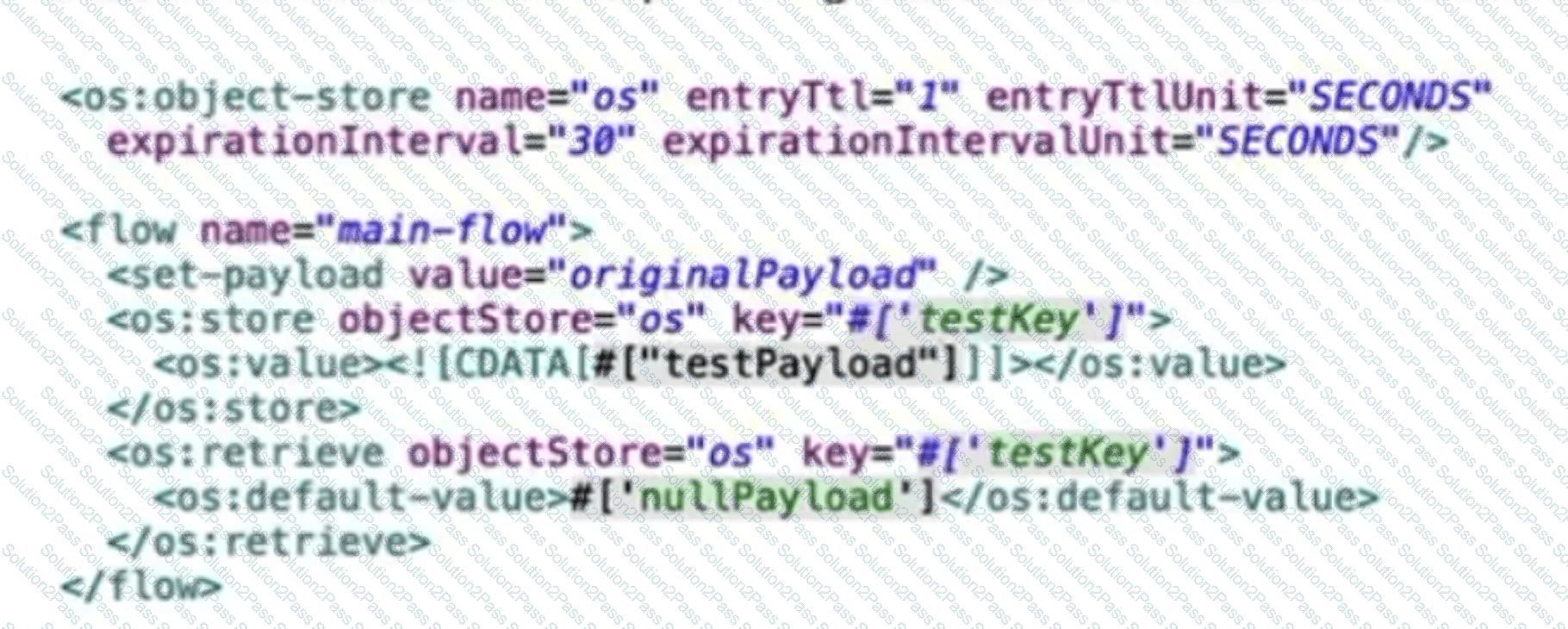
A Mule Object Store is configured with an entry TTL of one second and an expiration interval of 30 seconds.
What is the result of the flow if processing between os:store and os:retrieve takes 10 seconds?
Exhibit:
A new Mule project has been created in Anypoint Studio with the default settings.
Which file inside the Mule project must be modified before using Maven to successfully deploy the application?
Refer to the exhibits.
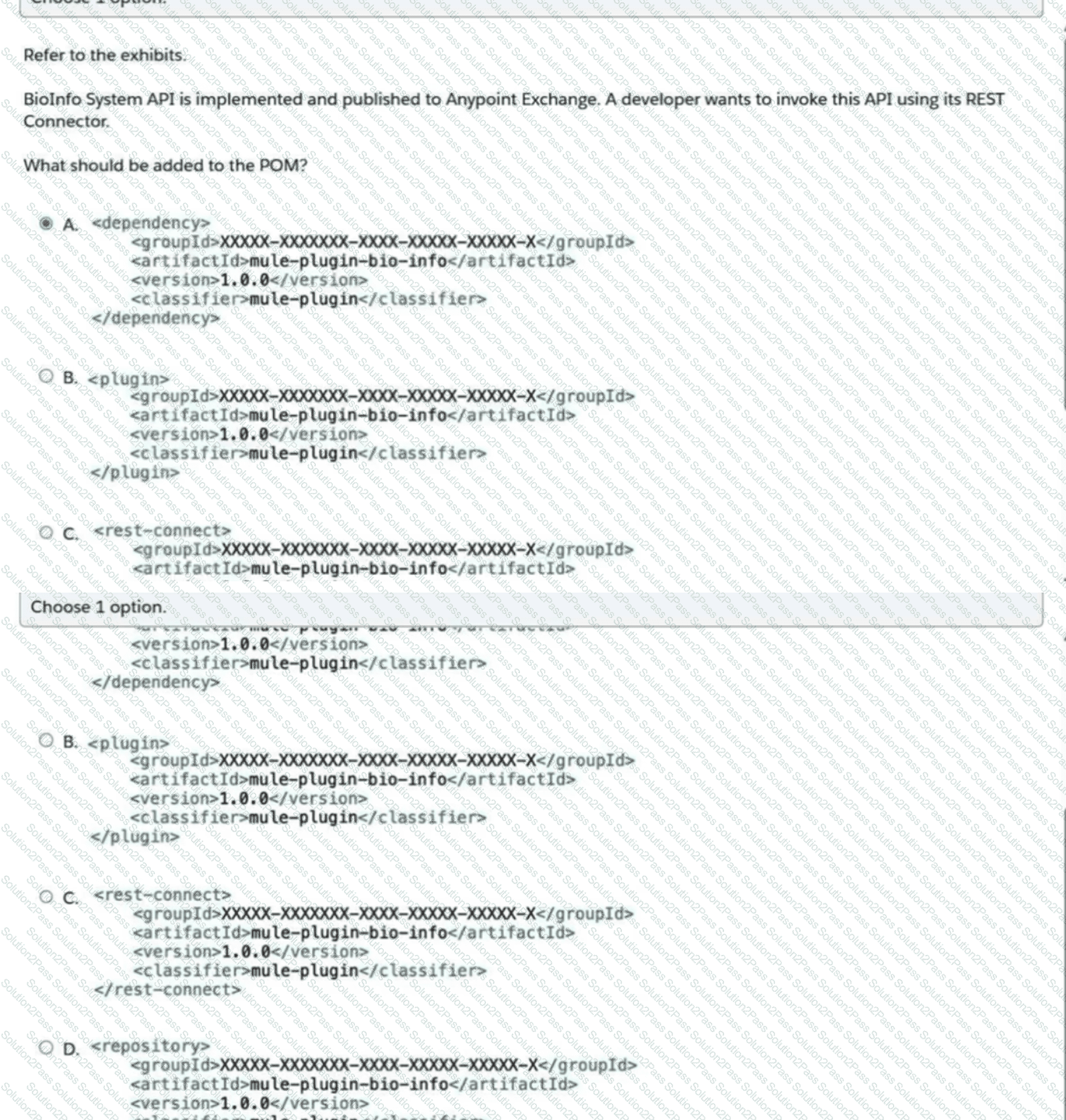
BioInfo System API is implemented and published to Anypoint Exchange. A developer wants to invoke this API using its REST Connector.
What should be added to the POM?
Exhibit / Answer Configurations:
An API has been developed and deployed to CloudHub. Among the policies applied to this API is an allowlist of IP addresses. A developer wants to run a test in Anypoint Studio and does not want any policies applied because their workstation is not included in the allowlist.
What must the developer do in order to run this test locally without the policies applied?
A Mule application defines an SSL/TLS keystore property "tls.keystore.keyPassword" as secure.
How can this property be referenced to access its value within the application?
A Mule application deployed to a standalone Mule runtime uses VM queues to publish messages to be consumed asynchronously by another flow.
In the case of a system failure, what will happen to in-flight messages in the VM queues that have not been consumed?