300-420 Cisco Designing Cisco Enterprise Networks (ENSLD) v1.1 Free Practice Exam Questions (2026 Updated)
Prepare effectively for your Cisco 300-420 Designing Cisco Enterprise Networks (ENSLD) v1.1 certification with our extensive collection of free, high-quality practice questions. Each question is designed to mirror the actual exam format and objectives, complete with comprehensive answers and detailed explanations. Our materials are regularly updated for 2026, ensuring you have the most current resources to build confidence and succeed on your first attempt.
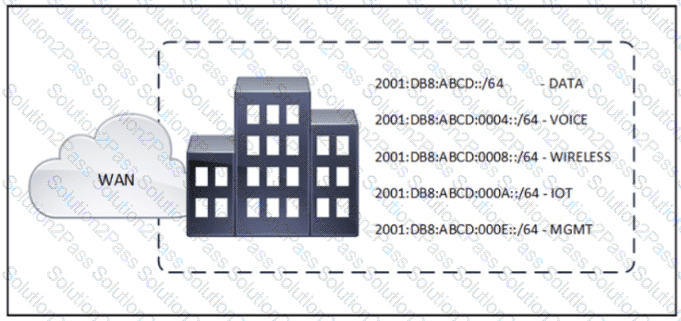
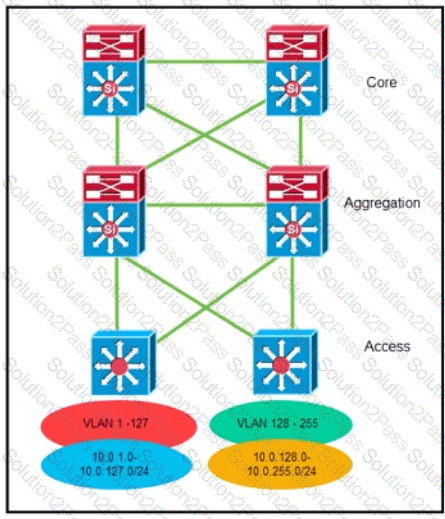
Refer to the exhibit A network administrator plans to announce the site subnets to the WAN using route summarization instead of announcing every subnet. What is the smallest summary route that should be used to encompass all subnets at the site?
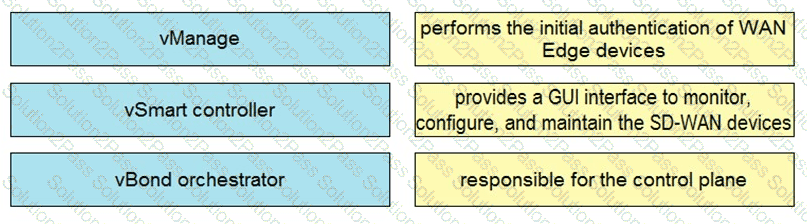
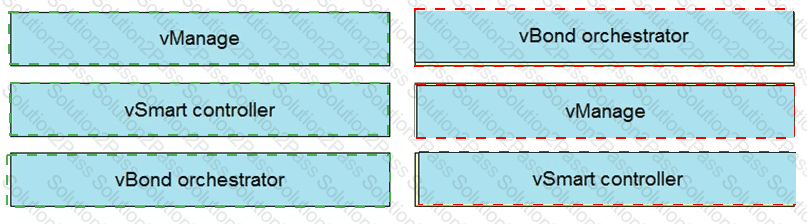
Drag and drop the elements from the left onto the functions they perform in the Cisco SD-WAN architecture on the right.
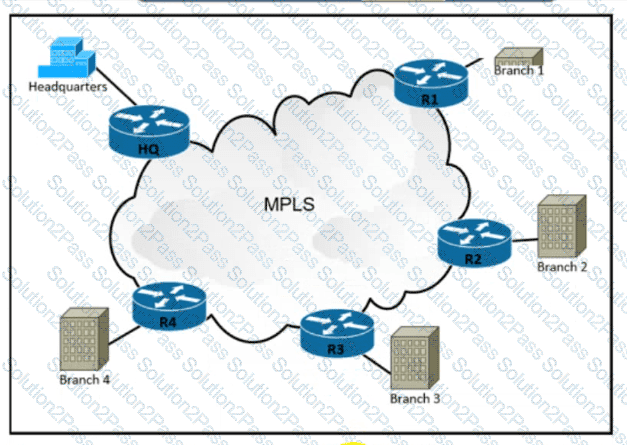
Refer to the exhibit. Currently, the network uses a single-homed solution for connecting to the internet. An engineer must design a more resilient WAN using the internet circuits at each site. The design must provide failover connectivity, support load-sharing of traffic, and QoS. Which solution must the engineer choose?
Which two statements about VRRP object tracking are true? (Choose two)
What is the purpose of Cisco vBond as a Session Traversal Utilities for NAT server?
Which AES mode should be used in a Cisco SD-WAN environment that includes multicast applications?
Which protocol is the Cisco SD-Access data plane based on?
Refer to the exhibit.
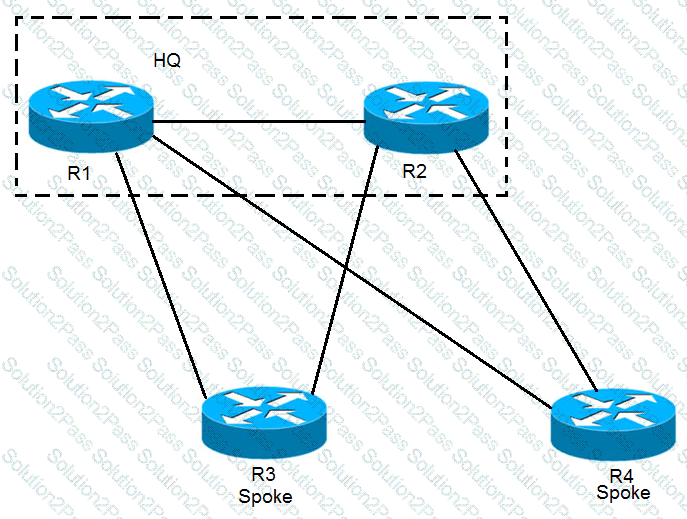
EIGRP has been configured on all links. The spoke nodes have been configured as EIGRP stubs, and the WAN links to R3 have higher bandwidth and lower delay than the links to R4. When a link failure occurs at the R1-R2 link, what happens to traffic on R1 that is destined for a subnet attached to R2?
What does the fabric data plane leverage in SD-Access Architecture?
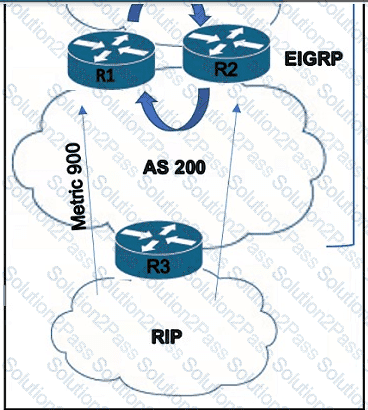
Refer to the exhibit. An architect must design a solution to connect the network behind R3 with the EIGRP network. Which mechanism should be included to avoid routing loops?
An engineer is designing an EIGRP network for a small branch site where there is only one Layer 3 router. The engineer wants the router to advertise the local LAN network to remote EIGRP neighbors without sending any unnecessary multicast messages on the local LAN. Which action should the engineer take?
Which queuing structure is used on SD-WAN Edge routers?
Which two functions are provided by the Cisco SD-WAN orchestration plane? (Choose two.)
Refer to the exhibit.
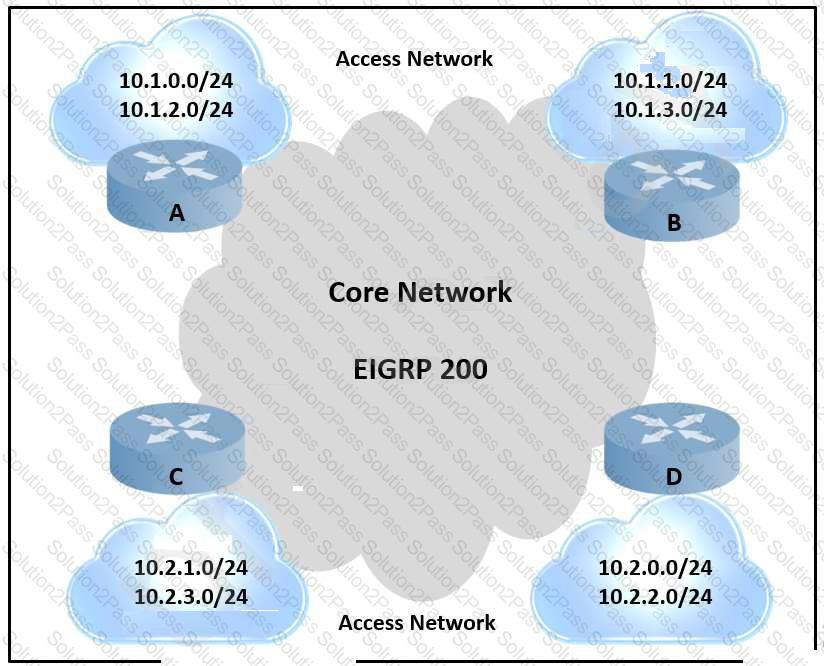
An engineer is designing a routing solution for a customer. The design must ensure that a failure of network
10.1.0.0/24, 10.1.2.0/24, 10.2.1.0/24, or 10.2.3.0/24 does not impact the core. It also requires fast convergence
time during any link failover in the core or access networks. Which solution must the engineer select?
How is internet access provided to a WAN edge router that is connected to a MPLS transport link?
An engineer is designing a BGP solution supporting a VXLAN environment over a Layer 3 IPv4 network fabric with these requirements
provide Layer 2 adjacency
allow VM migration of workloads between sites
IGP is OSPF
Which BGP address family must the engineer choose?
Refer to the exhibit. An architect is designing a Layer 3 campus network The design must hide network instability, reduce network overhead, and conserve critical device memory Which route summarization solution must the architect select?
A company plans to deploy a new application across the campus network and asks an engineer to create a QoS policy. The application has these characteristics:
UDP-based
inelastic flows
sensitive to delay over 100 milliseconds
sensitive to jitter over 50 milliseconds
The appropriate bandwidth is allocated and assigned to the queues. Which mechanism must the engineer use to manage the flows that exceed the configured threshold?
An architect is designing a network solution for a customer The network is IPv6-only with 1000 hosts. The design must provide external access to up to 10 concurrent IPv6 hosts to allow communication with legacy IPv4 devices on an adjacent network. The customer set aside 10 IPv4 addresses to allow for one-to-one communication between hosts. Which solution must the architect select ?
A company wants to switch from static routing to a dynamic routing protocol to ease the administrative and operational overhead. The network topology is hub and spoke, and the branches use DM VPN back to the hub with two 10-Mbps internet connections. The branch routers are multivendor and have limited memory and CPU resources. Which routing protocol and design solution meets the requirements?