DP-700 Microsoft Implementing Data Engineering Solutions Using Microsoft Fabric Free Practice Exam Questions (2026 Updated)
Prepare effectively for your Microsoft DP-700 Implementing Data Engineering Solutions Using Microsoft Fabric certification with our extensive collection of free, high-quality practice questions. Each question is designed to mirror the actual exam format and objectives, complete with comprehensive answers and detailed explanations. Our materials are regularly updated for 2026, ensuring you have the most current resources to build confidence and succeed on your first attempt.
You need to resolve the sales data issue. The solution must minimize the amount of data transferred.
What should you do?
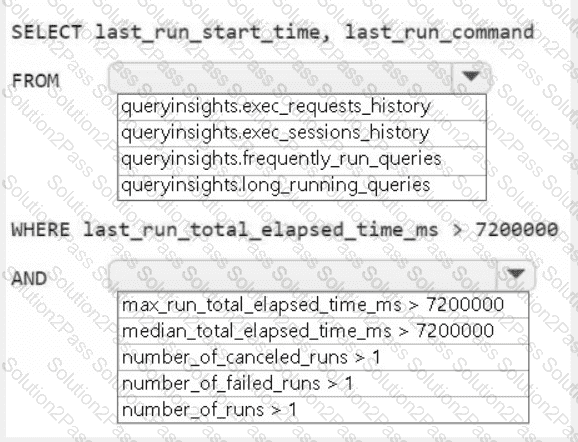
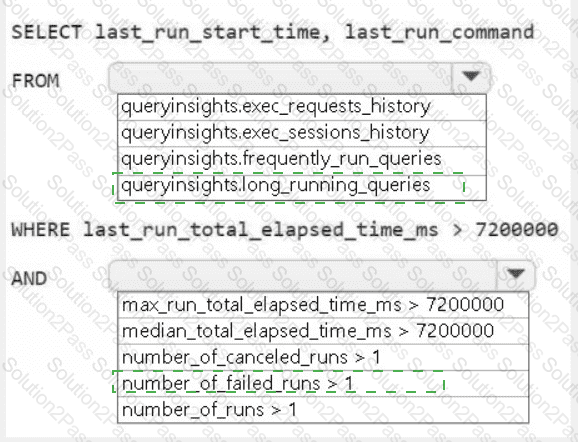
HOTSPOT
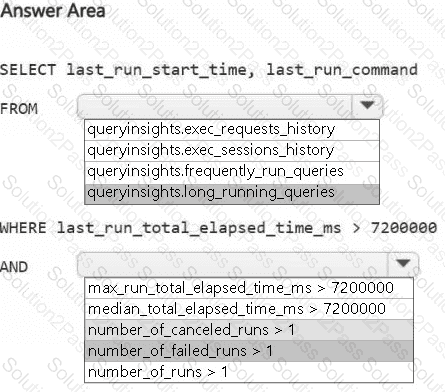
You need to troubleshoot the ad-hoc query issue.
How should you complete the statement? To answer, select the appropriate options in the answer area.
NOTE: Each correct selection is worth one point.
 A screenshot of a computer Description automatically generated
You need to create a workflow for the new book cover images.
Which two components should you include in the workflow? Each correct answer presents part of the solution.
NOTE: Each correct selection is worth one point.
You have a Fabric workspace that contains a warehouse named Warehouse1.
You have an on-premises Microsoft SQL Server database named Database1 that is accessed by using an on-premises data gateway.
You need to copy data from Database1 to Warehouse1.
Which item should you use?
You need to ensure that processes for the bronze and silver layers run in isolation How should you configure the Apache Spark settings?
You have a Fabric notebook named Notebook1 that has been executing successfully for the last week.
During the last run, Notebook1executed nine jobs.
You need to view the jobs in a timeline chart.
What should you use?
You have a Fabric workspace named Workspace1.
You plan to configure Git integration for Workspace1 by using an Azure DevOps Git repository. An Azure DevOps admin creates the required artifacts to support the integration of Workspace1 Which details do you require to perform the integration?
You have a Fabric workspace named Workspace1 that contains a notebook named Notebook1.
In Workspace1, you create a new notebook named Notebook2.
You need to ensure that you can attach Notebook2 to the same Apache Spark session as Notebook1.
What should you do?
You have a Fabric workspace that contains a notebook named Notebook1 and an Azure Data Factory pipeline named Pipeline1. Pipeline1 runs Notebook1 by using a notebook activity and passes simple parameter types.
Notebook1 contains the following cells:
Cell 3: Contains %%configure code that sets Apache Spark session properties
Cell 5: Contains a designated parameters cell
During an execution of Pipeline1, the pipeline fails before any business logic runs.
You need to ensure that Pipeline1 runs successfully.
What should you do?
Note: This question is part of a series of questions that present the same scenario. Each question in the series contains a unique solution that might meet the stated goals. Some question sets might have more than one correct solution, while others might not have a correct solution.
After you answer a question in this section, you will NOT be able to return to it. As a result, these questions will not appear in the review screen.
You have a KQL database that contains two tables named Stream and Reference. Stream contains streaming data in the following format.
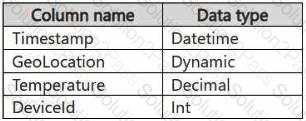
Reference contains reference data in the following format.
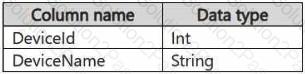
Both tables contain millions of rows.
You have the following KQL queryset.

You need to reduce how long it takes to run the KQL queryset.
Solution: You move the filter to line 02.
Does this meet the goal?
What should you do to optimize the query experience for the business users?
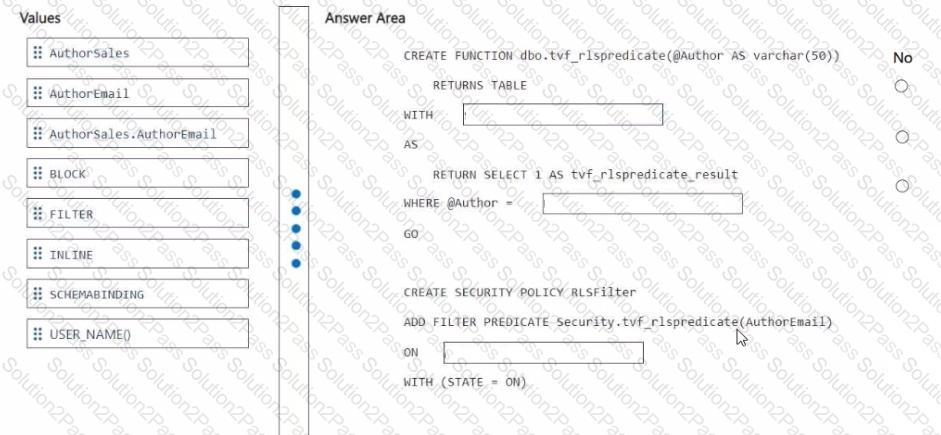
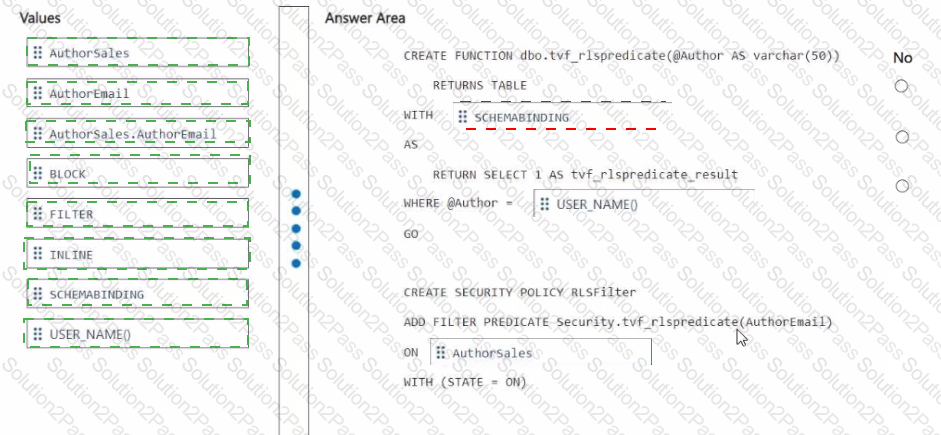
You need to ensure that the authors can see only their respective sales data.
How should you complete the statement? To answer, drag the appropriate values the correct targets. Each value may be used once, more than once, or not at all. You may need to drag the split bar between panes or scroll to view content
NOTE: Each correct selection is worth one point.
You need to return records ingested during the last 540 seconds.
Which KQL filter should you use?
You need to develop an orchestration solution in fabric that will load each item one after the other. The solution must be scheduled to run every 15 minutes. Which type of item should you use?
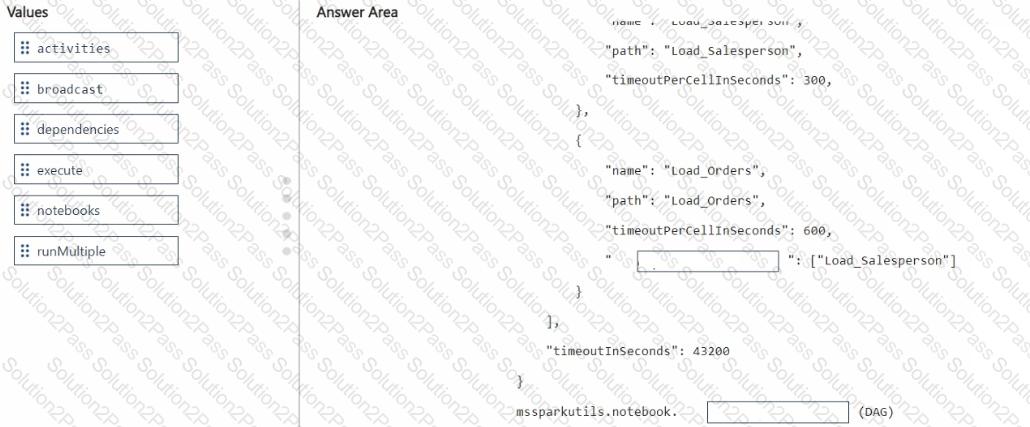
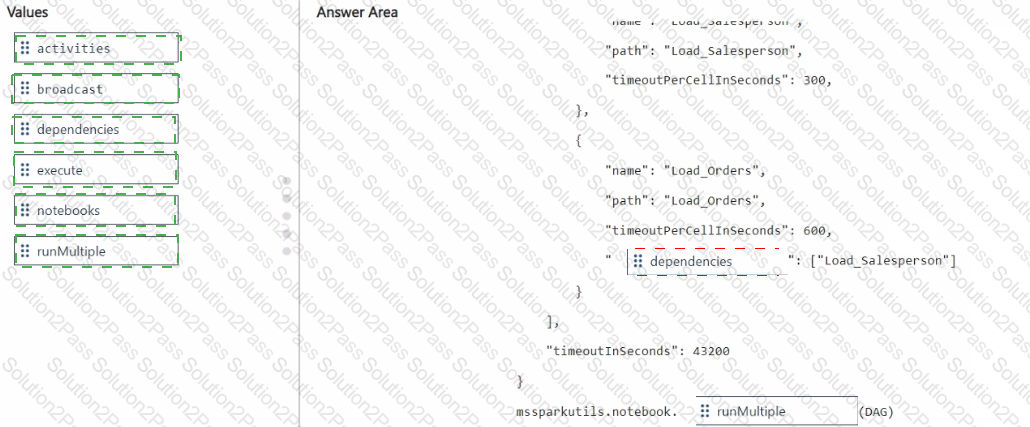
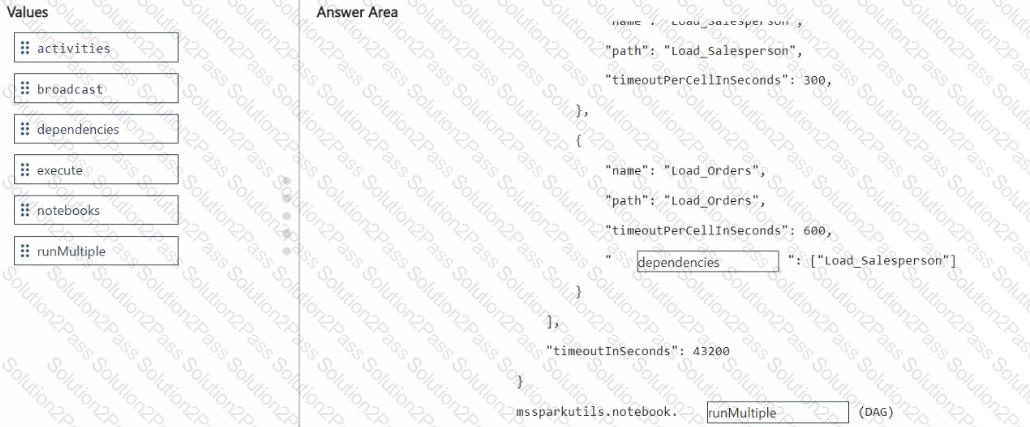
You have two Fabric notebooks named Load_Salesperson and Load_Orders that read data from Parquet files in a lakehouse. Load_Salesperson writes to a Delta table named dim_salesperson. Load.Orders writes to a Delta table named fact_orders and is dependent on the successful execution of Load_Salesperson.
You need to implement a pattern to dynamically execute Load_Salesperson and Load_Orders in the appropriate order by using a notebook.
How should you complete the code? To answer, drag the appropriate values the correct targets. Each value may be used once, more than once, or not at all. You may need to drag the split bar between panes or scroll to view content.
NOTE: Each correct selection is worth one point.
 C:\Users\Waqas Shahid\Desktop\Mudassir\Untitled.jpg
You have a Fabric workspace named Workspace1 that uses version control. Workspace! and Azure DevOps are integrated.
In Azure DevOps. developers create a branch named Branch1 to test extract, transform, and load (ETL) updates.
You need to connect Workspace1 to Branch1. The solution must ensure that all the existing content in Branch1 is available in Workspace1.
What should you do?
Note: This question is part of a series of questions that present the same scenario. Each question in the series contains a unique solution that might meet the stated goals. Some question sets might have more than one correct solution, while others might not have a correct solution.
After you answer a question in this section, you will NOT be able to return to it. As a result, these questions will not appear in the review screen.
You have a KQL database that contains two tables named Stream and Reference. Stream contains streaming data in the following format.
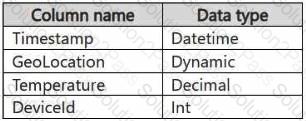
Reference contains reference data in the following format.
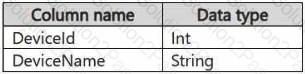
Both tables contain millions of rows.
You have the following KQL queryset.

You need to reduce how long it takes to run the KQL queryset.
Solution: You change the join type to kind=outer.
Does this meet the goal?
You have a Fabric workspace named Workspace1 that contains a data pipeline named Pipeline1 and a lakehouse named Lakehouse1.
You have a deployment pipeline named deployPipeline1 that deploys Workspace1 to Workspace2.
You restructure Workspace1 by adding a folder named Folder1 and moving Pipeline1 to Folder1.
You use deployPipeline1 to deploy Workspace1 to Workspace2.
What occurs to Workspace2?
You have a Fabric workspace that contains a lakehouse named Lakehouse1.
In an external data source, you have data files that are 500 GB each. A new file is added every day.
You need to ingest the data into Lakehouse1 without applying any transformations. The solution must meet the following requirements
Trigger the process when a new file is added.
Provide the highest throughput.
Which type of item should you use to ingest the data?
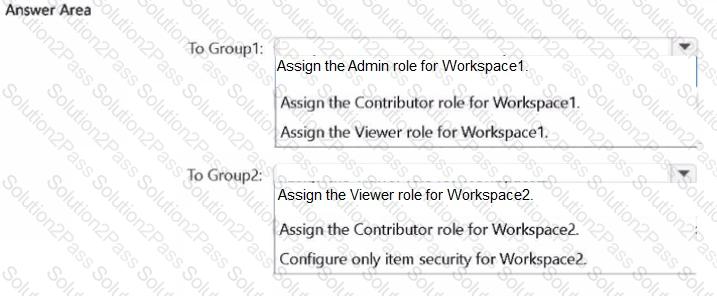
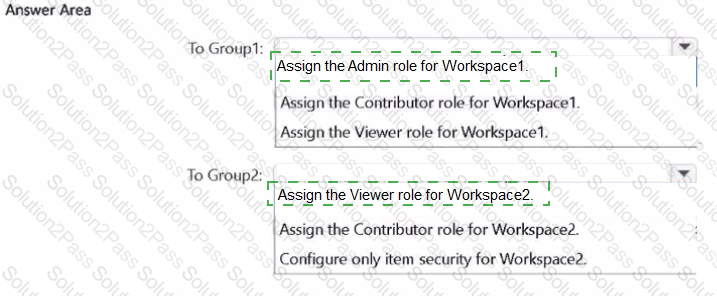
You have a Fabric tenant that is linked to a Microsoft Entra tenant. The Microsoft [intra tenant contains a user named User1 and two groups named Group! and Groups.
The Fabric tenant contains the workspaces shown in the following table.
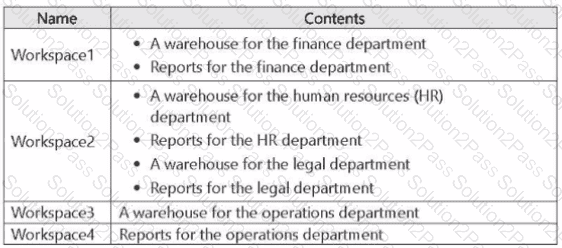
You need to meet the following access requirements:
• User1 must have read access to the following:
• The operations department reports
• The HR department warehouse and reports
• The legal department warehouse and reports
• User1 must be able to create new items in Workspace
• Group1 must have access to the finance department warehouse and reports.
• Group1 must be able to add new users to the finance department workspace.
• Group2 must have access to only the HR warehouse and the legal warehouse.
The solution must follow the principle of least privilege.
What should you do? To answer, select the appropriate options in the answer area.
NOTE: Each correct selection is worth one point.