NSE6_SDW_AD-7.6 Fortinet NSE 6 - SD-WAN 7.6 Enterprise Administrator Free Practice Exam Questions (2026 Updated)
Prepare effectively for your Fortinet NSE6_SDW_AD-7.6 Fortinet NSE 6 - SD-WAN 7.6 Enterprise Administrator certification with our extensive collection of free, high-quality practice questions. Each question is designed to mirror the actual exam format and objectives, complete with comprehensive answers and detailed explanations. Our materials are regularly updated for 2026, ensuring you have the most current resources to build confidence and succeed on your first attempt.
To secure your enterprise network traffic, which step does FortiGate perform first, when handling the first packets of a session? (Choose one answer)
Refer to the exhibits.
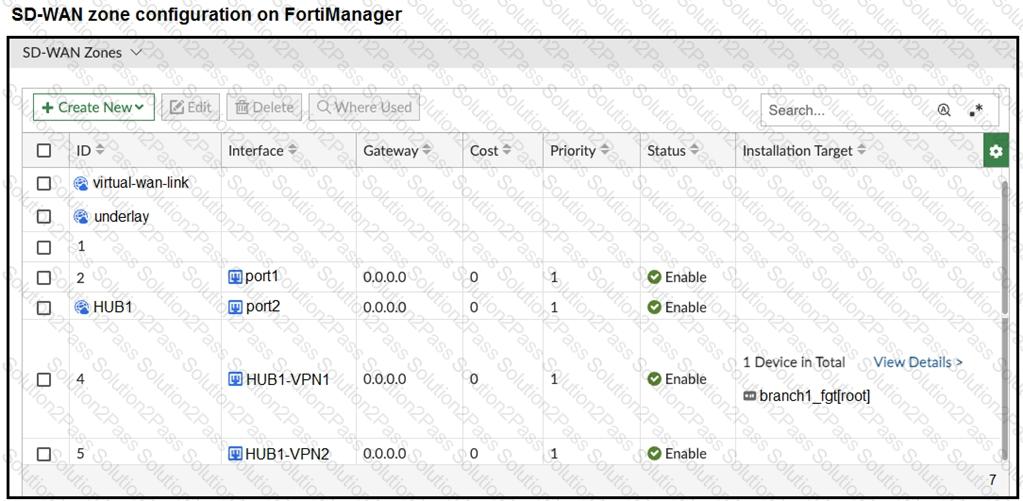
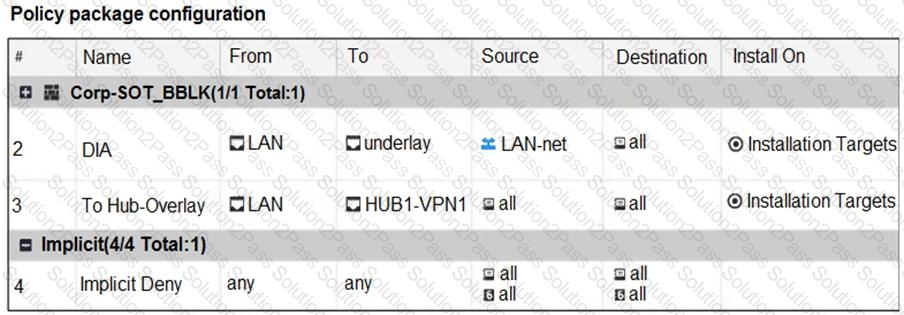
The exhibits show the SD-WAN zone configuration of an SD-WAN template prepared on FortiManager and the policy package configuration.
When the administrator tries to install the configuration changes, FortiManager fails to commit.
What should the administrator do to fix the issue?
Refer to the exhibits.
You use FortiManager to configure SD-WAN on three branch devices.
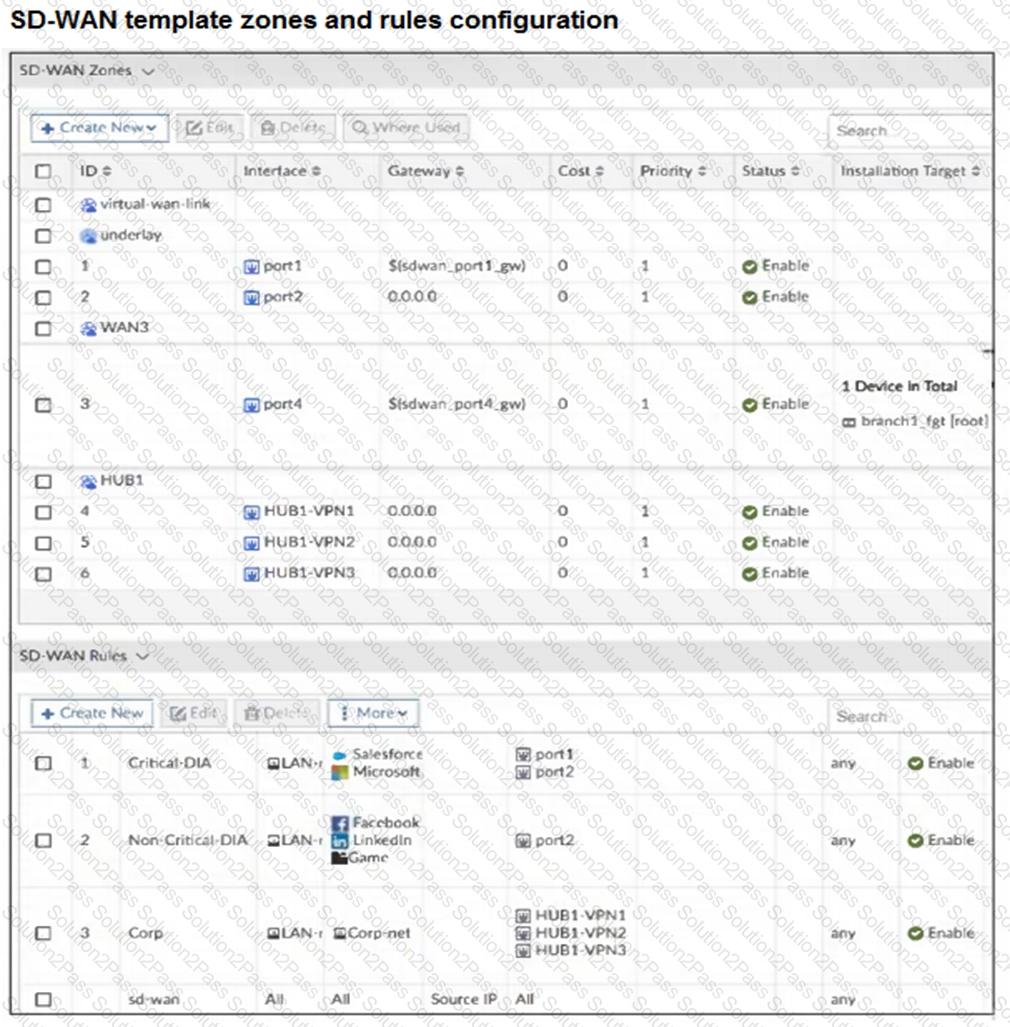
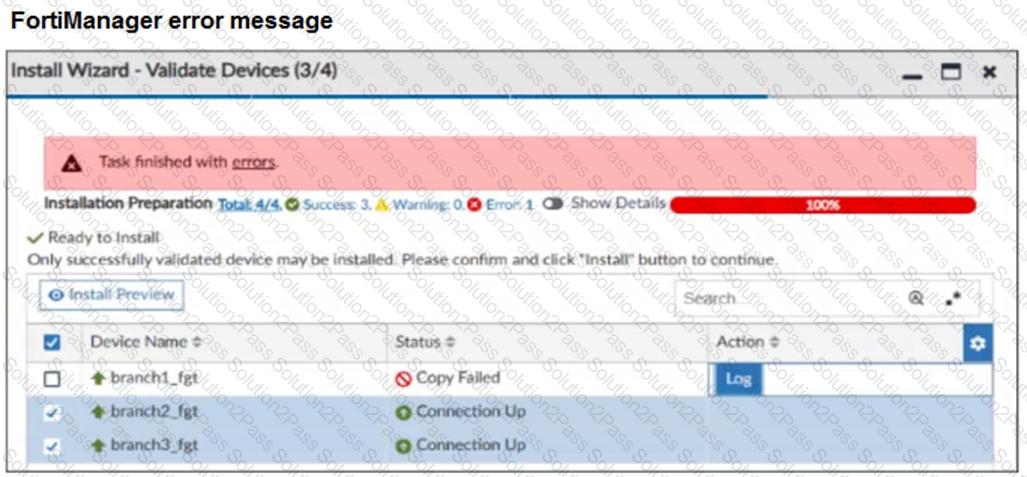
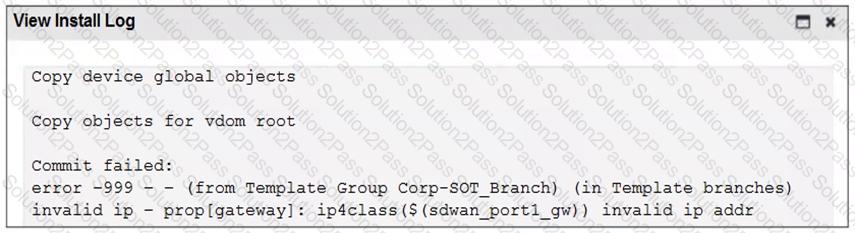
When you install the device settings, FortiManager prompts you with the error “Copy Failed” for the device branch1_fgt. When you click the log button, FortiManager displays the message shown in the exhibit.
There are two different ways to resolve this issue. Based on the exhibits, which methods could you use? (Choose two.)
Refer to the exhibit.
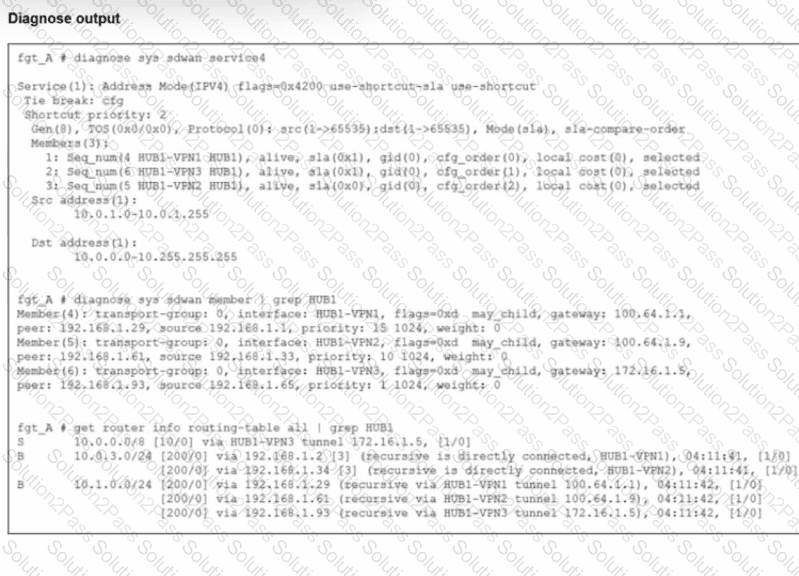
An administrator is troubleshooting SD-WAN on FortiGate. A device behind branch1_fgt generates traffic to the 10.0.0.0/8 network.
The administrator expects the traffic to match SD-WAN rule ID 1 and be routed over HUB1-VPN1. However, the traffic is routed over HUB1-VPN3.
Based on the output shown in the exhibit, which two reasons, individually or together, could explain the observed behavior? (Choose two.)
Refer to the exhibit.
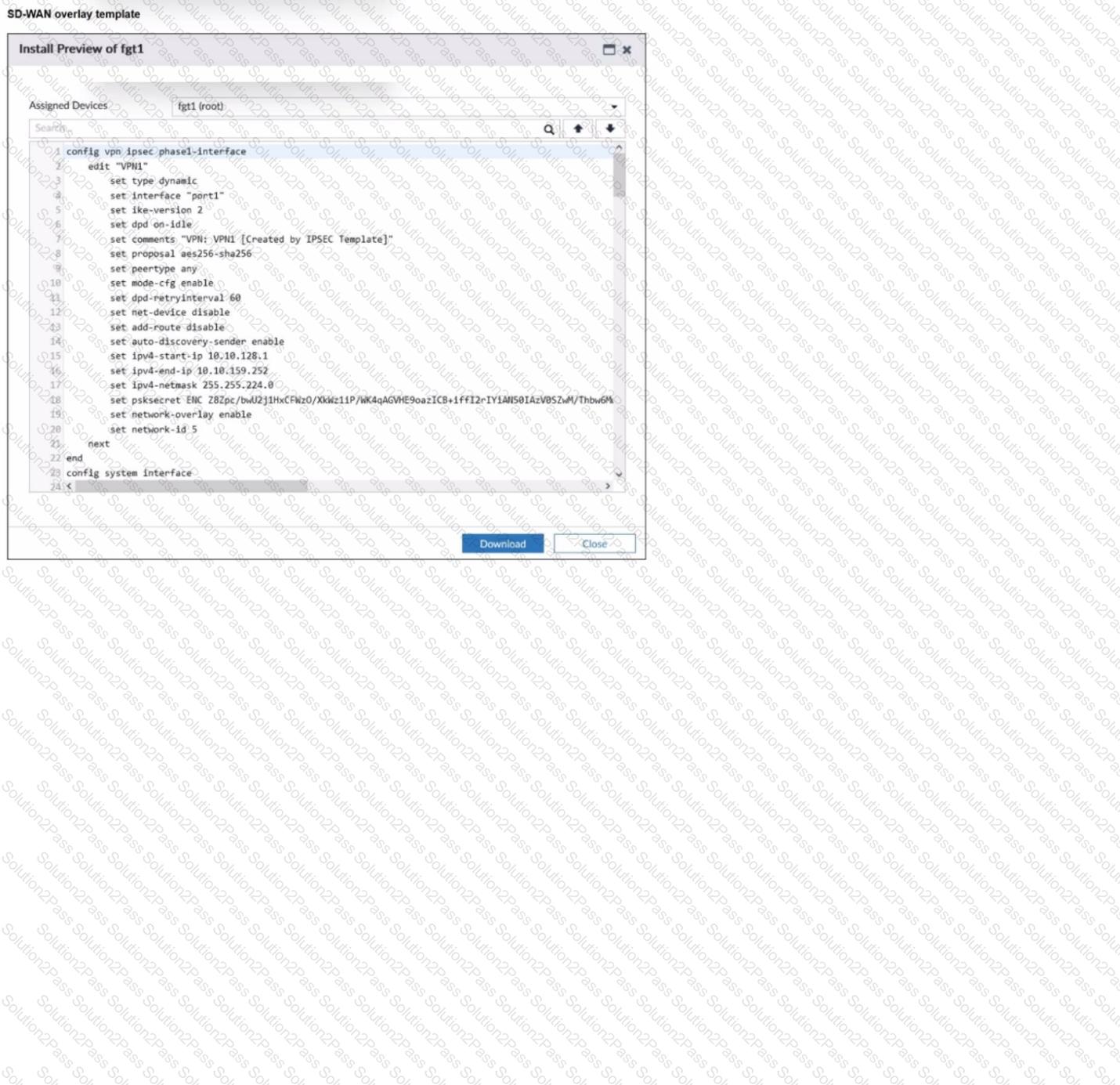
The administrator used the SD-WAN overlay template to prepare an IPsec tunnels configuration for a hub-and-spoke SD-WAN topology. The exhibit shows the FortiManager installation preview for one FortiGate device.
Based on the exhibit, which statement best describes the configuration applied to the FortiGate device?
Exhibit.
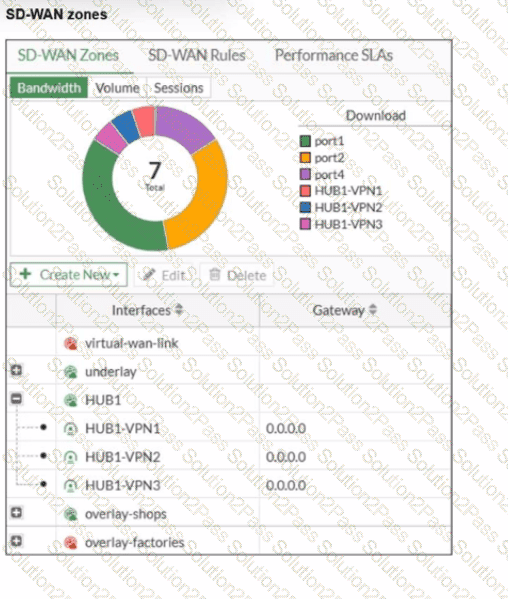
Refer to the exhibit, which shows an SD-WAN zone configuration on the FortiGate GUI. What can you conclude about the zone and member configuration on this device?
(You are configuring SD-WAN to load balance network traffic and you want to take into account the link quality.
Which two facts should you consider? Choose two answers.)
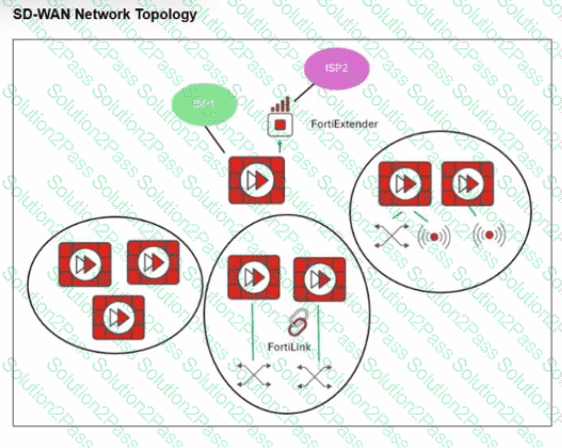
Refer to the exhibit.
You want to configure SD-WAN on a network as shown in the exhibit.
The network contains many FortiGate devices. Some are used as NGFW, and some are installed with extensions such as FortiSwitch. FortiAP. or Forti Ex tender.
What should you consider when planning your deployment?
When a customer delegate the installation and management of its SD-WAN infrastructure to an MSSP, the MSSP usually keeps the hub within its infrastructure for ease of management and to share costly resources.
In which two situations will the MSSP install the hub in customer premises? (Choose two.)
Refer to the exhibits.
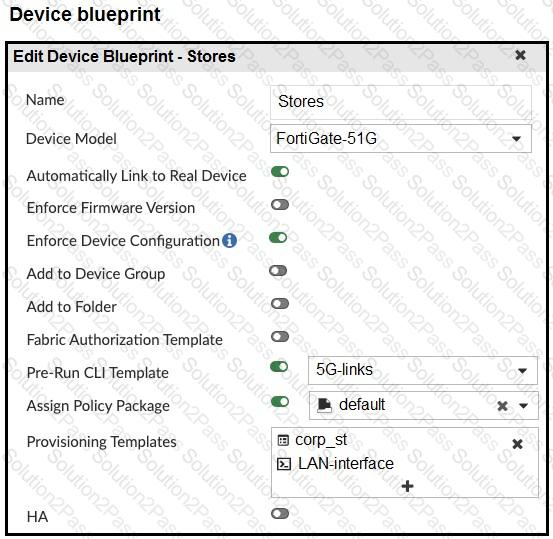
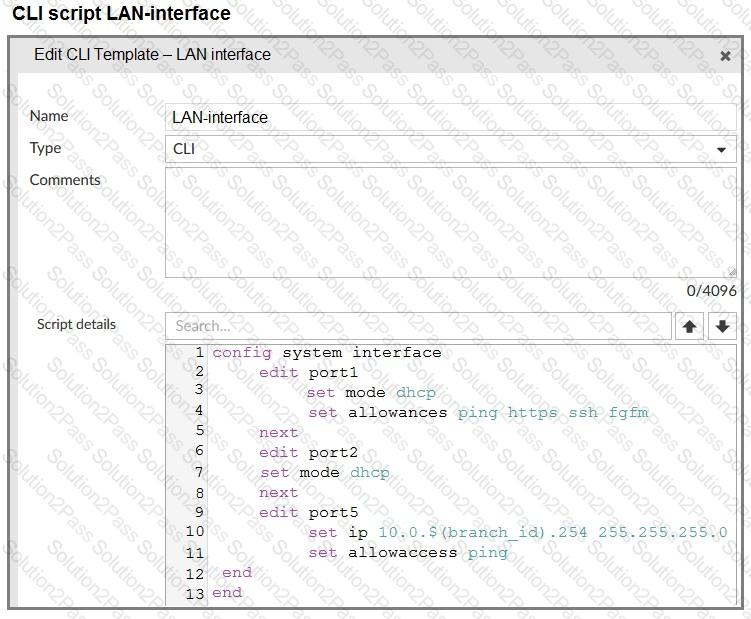
The administrator configured a device blueprint and CLI scripts as shown in the exhibits, to prepare for onboarding FortiGate devices in the company’s stores. Later, a technician prepares a FortiGate 51G with a basic configuration and connects it to the network. The basic configuration contains the port1 configuration and the minimal configuration required to allow the device to connect to FortiManager.
After the device first connects to FortiManager, FortiManager updates the device configuration.
Based on the exhibits, which actions does FortiManager perform?
Refer to the exhibit.
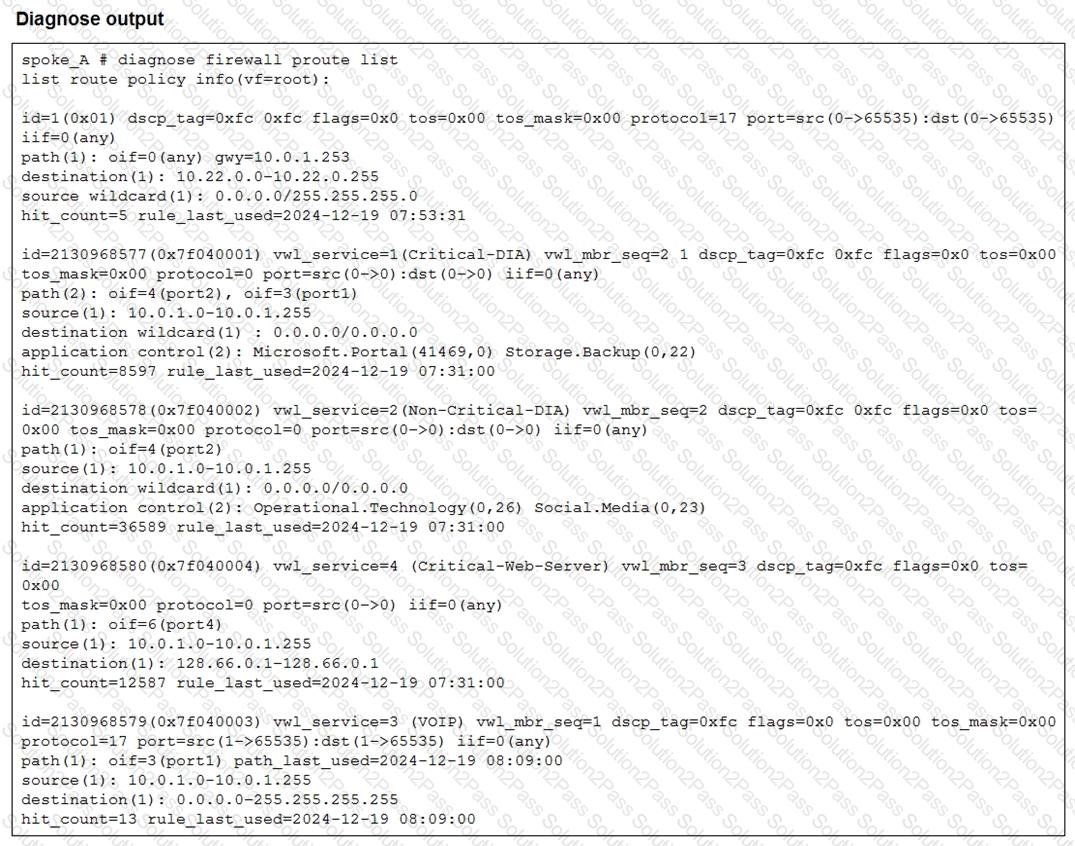
Which two conclusions can you draw from the output shown? (Choose two.)
Refer to the exhibit.
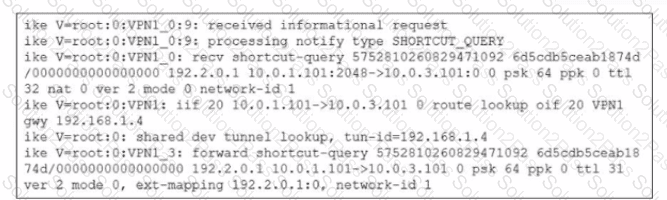
Which statement best describe the role of the ADVPN device in handling traffic?
(Refer to the exhibits.
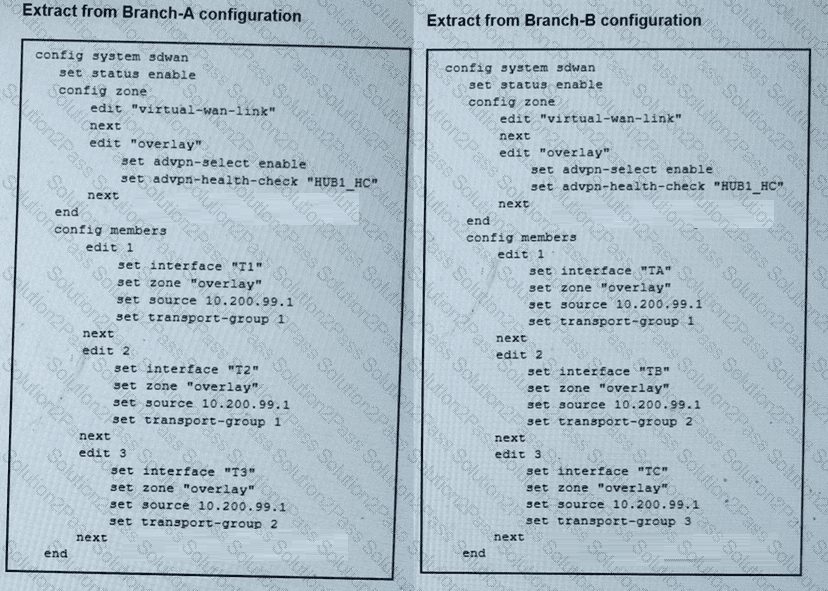
The SD-WAN zones and members configuration of two branch devices are shown. The two branch devices are part of the same hub-and-spoke topology and connect to the same hub. The devices are configured to allow Auto-Discovery VPN (ADVPN). The configuration on the hub allows the initial communication between the two spokes.
When traffic flows require it, between which interfaces can the devices establish shortcuts? Choose one answer.)
(Refer to the exhibit.
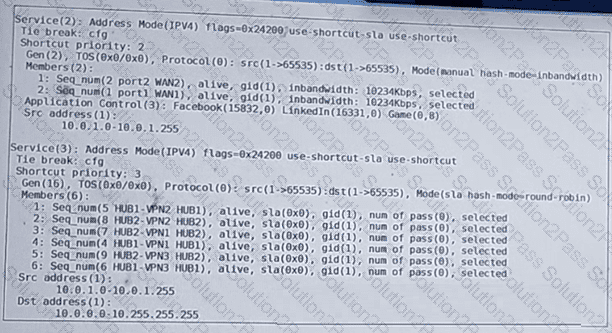
The administrator configured two SD-WAN rules to load balance traffic.
Which interfaces does FortiGate use to steer the traffic from 10.0.1.124 to 10.0.0.254 ? Choose one answer.)
(You plan a large SD-WAN deployment for a global company. You want to divide the network architecture into five geographical regions and install two hubs in each region for increased redundancy. You expect a significant amount of traffic within each region and limited traffic flow between spokes in different regions. You plan to connect the small branch sites to only the closest hub in their regions and the large branch sites to the two hubs in the regions.
Which statement about your plan is true? Choose one answer.)
Refer to the exhibits.
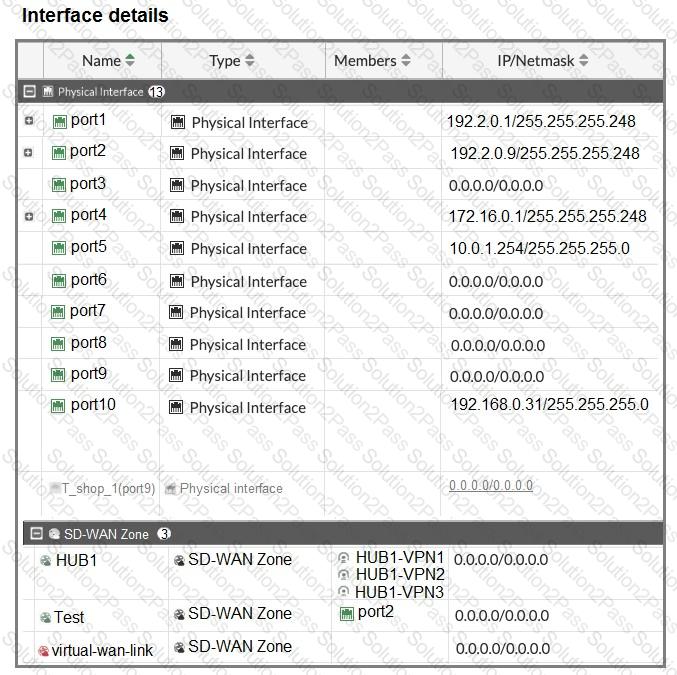
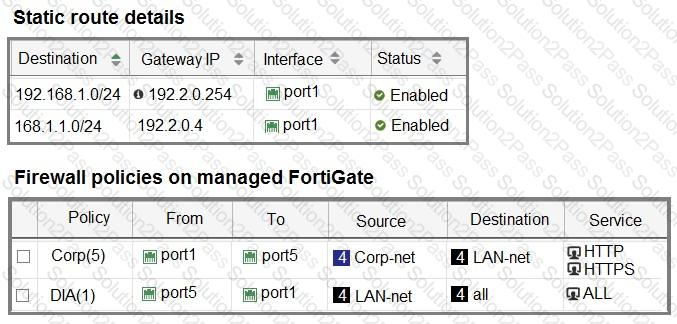
The interface details, static route configuration, and firewall policies on the managed FortiGate device are shown.
You want to configure a new SD-WAN zone, named Underlay, that contains the interfaces port1 and port2.
What must be your first action?
Refer to the exhibit.
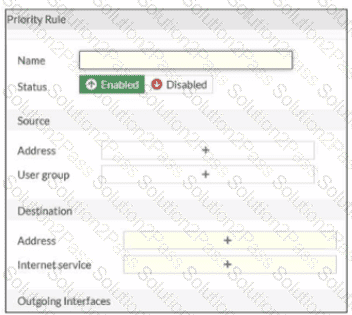
An administrator configures SD-WAN rules for a DIA setup using the FortiGate GUI. The page to configure the source and destination part of the rule looks as shown in the exhibit. The GUI page shows no option to configure an application as the destination of the SD-WAN rule Why?
Refer to the exhibits.
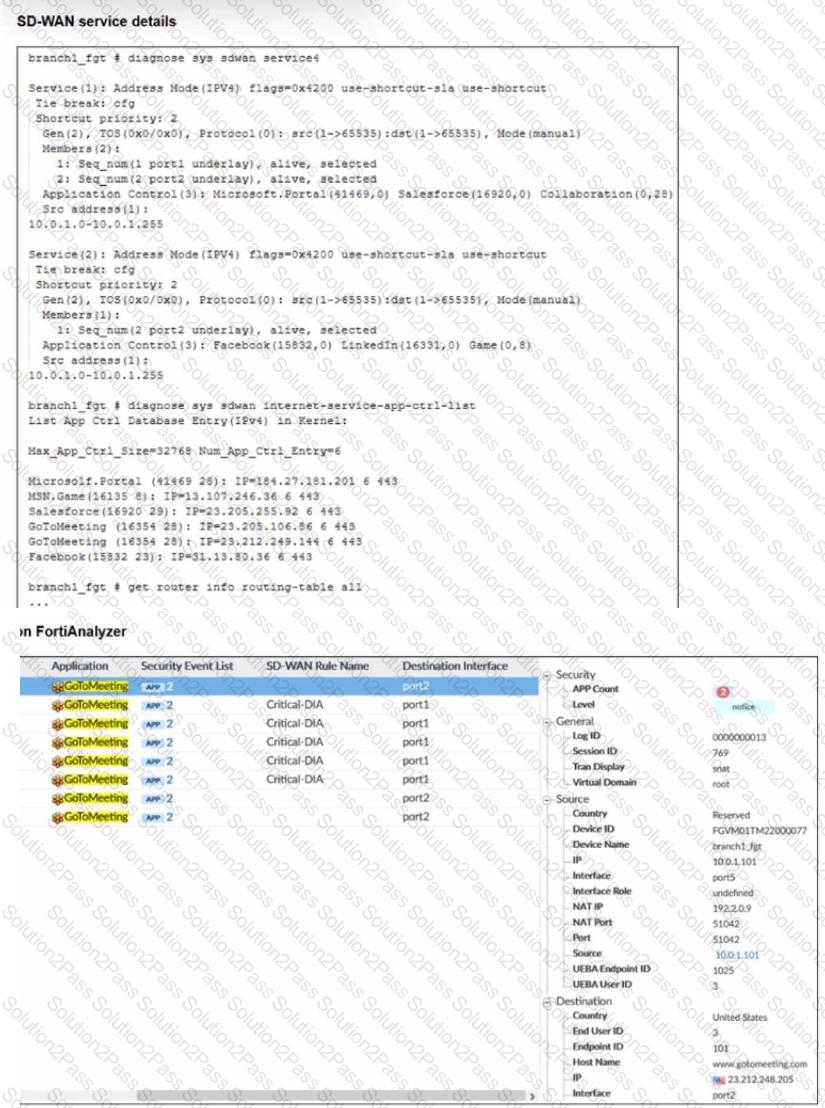
An administrator is testing application steering in SD-WAN. Before generating test traffic, the administrator collected the information shown in the first exhibit. After generating GoToMeeting test traffic, the administrator examined the corresponding traffic log on FortiAnalyzer, which is shown in the second exhibit.
The administrator noticed that the traffic matched the implicit SD-WAN rule, but they expected the traffic to match rule ID 1.
Which two reasons explain why some log messages show that the traffic matched the implicit SD-WAN rule? (Choose two.)
(Refer to the exhibits. You collected the output shown in the exhibits and want to know which interface TCP traffic will flow through from the user device 10.0.1.101 to the corporate file server 10.0.0.125 . All SD-WAN links are stable.
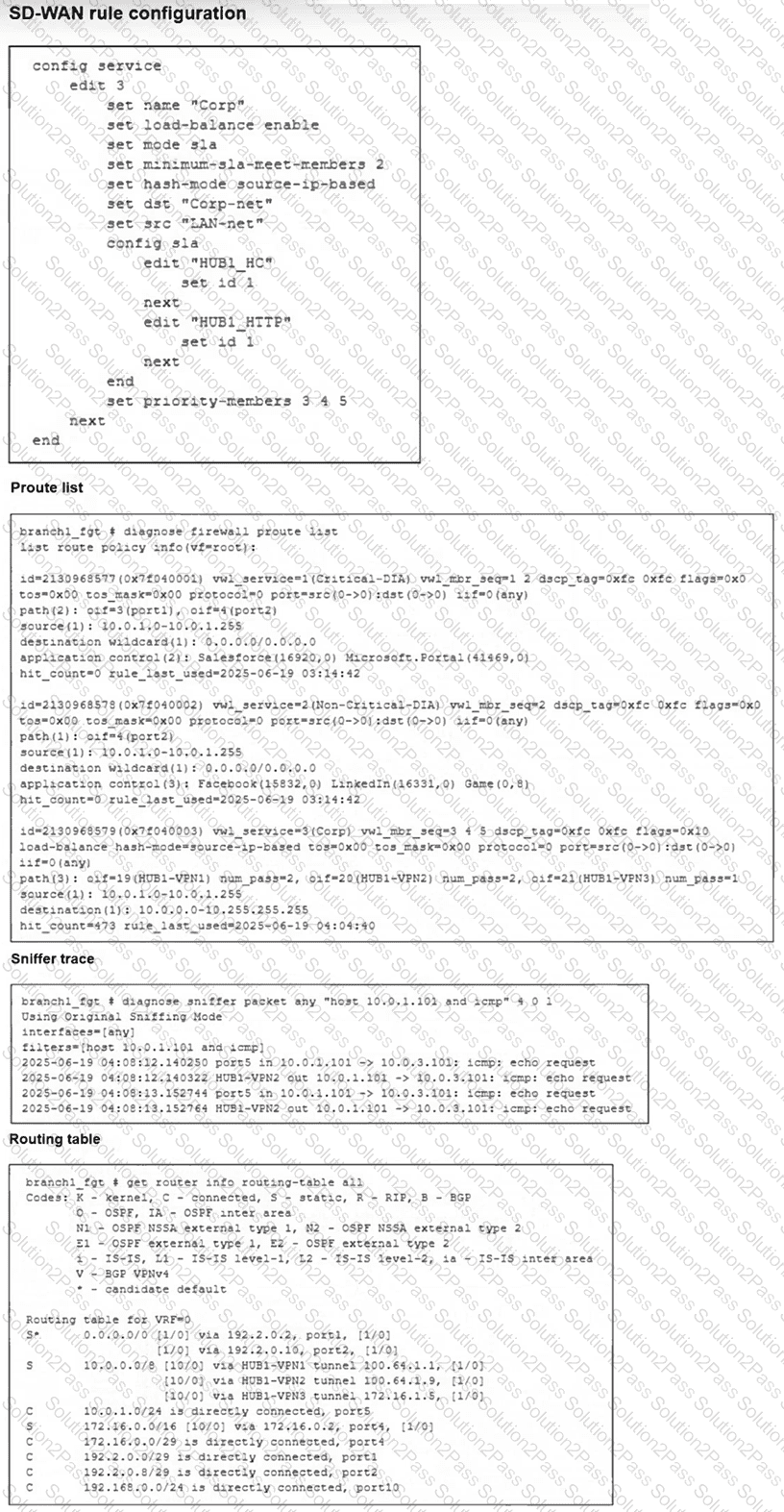
Which interface will FortiGate use to steer the traffic? Choose one answer.)
Refer to the exhibits.
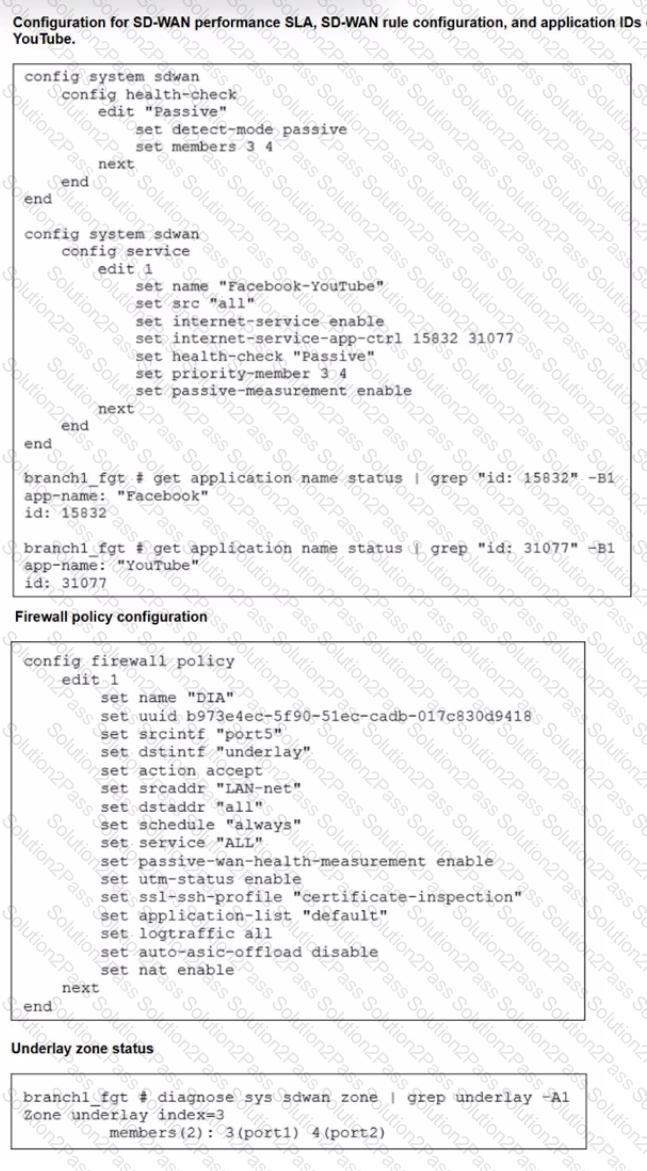
The exhibits show the configuration for SD-WAN performance. SD-WAN rule, the application IDs of Facebook and YouTube along with the firewall policy configuration and the underlay zone status.
Which two statements are true about the health and performance of SD-WAN members 3 and 4? (Choose two.)