H12-831_V1.0 Huawei HCIP-Datacom-Advanced Routing & Switching Technology V1.0 Free Practice Exam Questions (2026 Updated)
Prepare effectively for your Huawei H12-831_V1.0 HCIP-Datacom-Advanced Routing & Switching Technology V1.0 certification with our extensive collection of free, high-quality practice questions. Each question is designed to mirror the actual exam format and objectives, complete with comprehensive answers and detailed explanations. Our materials are regularly updated for 2026, ensuring you have the most current resources to build confidence and succeed on your first attempt.
An interface of a switch is in error-down state. A possible cause is that the average rate of broadcast packets received by the interface exceeds the upper threshold set by the administrator for storm control.
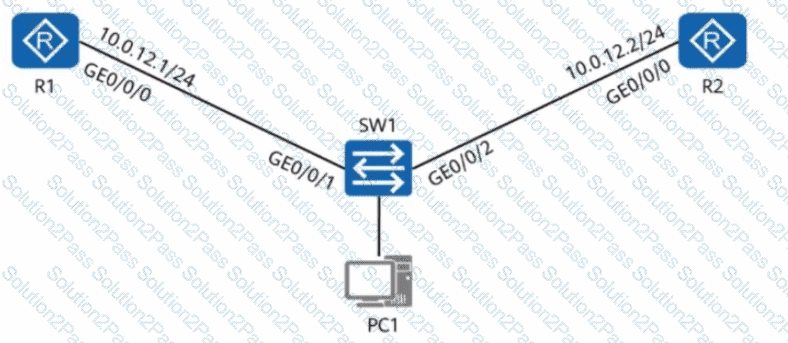
On the network shown in the figure, VRRP is configured on Rl and R2, and the virtual IP address is 10.0.12.254. After the configuration is complete, the network engineer checks the VRRP status on R1 and R2, and finds that both devices are in the Master state. Which of the following is not a possible cause of this problem?
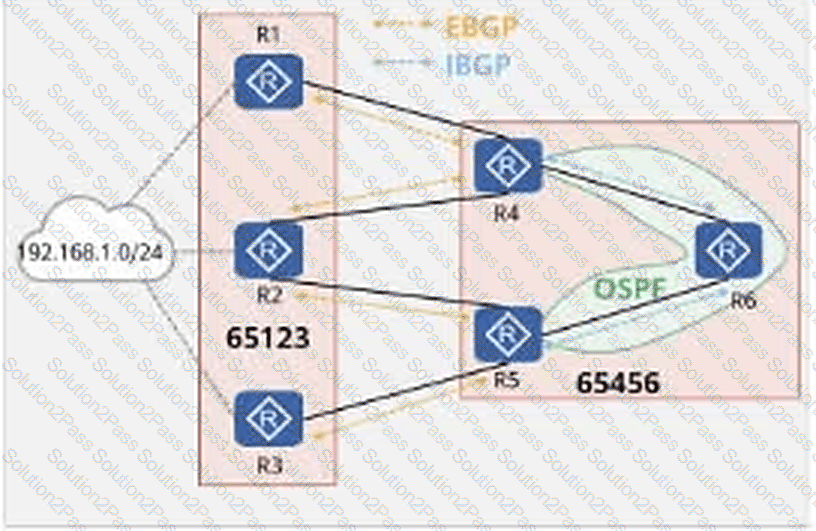
On the network shown in the figure, EBGP peer relationships are established between ASs through directly connected interfaces. OSPF is deployed in AS 65456 (with OSPF disabled on interconnected interfaces between ASs). R4 and R5 use Loopback0 to establish IBGP peer relationships with R6. The IP address of Loopback0 on each router is 10.0.X.X/32, and the router ID is 10.0.X.X, where X is the number of the router. R1, R2, and R3 import the external route 192.168.1.0/24 to BGP through the import-route command. The maximum load-balancing 2 command is configured on R1, R2, R3, R4, R5, and R6. Which of the following statements are true?
MPLS can carry multiple network protocol services, including unicast IPv4 services, multicast IPv4 services, unicast IPv6 services, and multicast IPv6 services.
VPN traffic transmitted on a typical BGP/MPLS IP VPN network typically contains two labels. Which of the following statements are false about the two labels?
On the OSPF network shown in the figure, area 1 is a stub area, area 2 is a totally stub area, and area 3 is an NSSA. Which of the following LSAs does not exist in areas 1, 2, and 3?
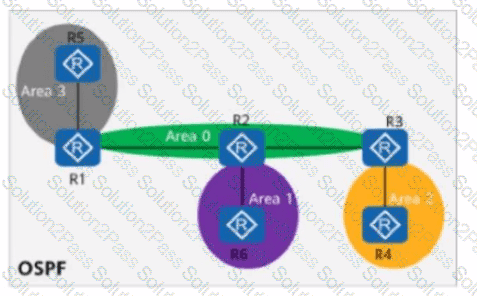
OSPF requires that routers in the same area have the same link state database (LSDB). As the number of routes on the network increases, some routers cannot carry so much routing information due to limited system resources. This state is called database overflow. If the Isdb-overflow-limit number 7 command is run on all routers on an OSPF network, which of the following conditions are likely to cause routers to enter the overflow state?
On the network shown in the figure, IS-IS runs on R1, R2, R4, and R5, and the area ID is 49.0001. IS-IS runs on R3 and R6, and the area ID is 49.0002. The import-route isis level-2 into level-1 command is configured on R2.
In AS 65000, R1, R3, R4, and R6 each establish iBGP peer relationships with R2 and R5. R2 and R5 are Route Reflectors (RRs), and R1, R4, R3, and R6 are clients.
The iBGP peer relationships are established using Loopback0. The IP address of Loopback0 on each router is 10.0.X.X/32, and the router ID is 10.0.X.X, where X is the number of the router.
R1 and R4 import the external route 192.168.1.0/24 to BGP through the import-route command, and R3 and R6 import the external route 192.168.2.0/24 to BGP through the import-route command.
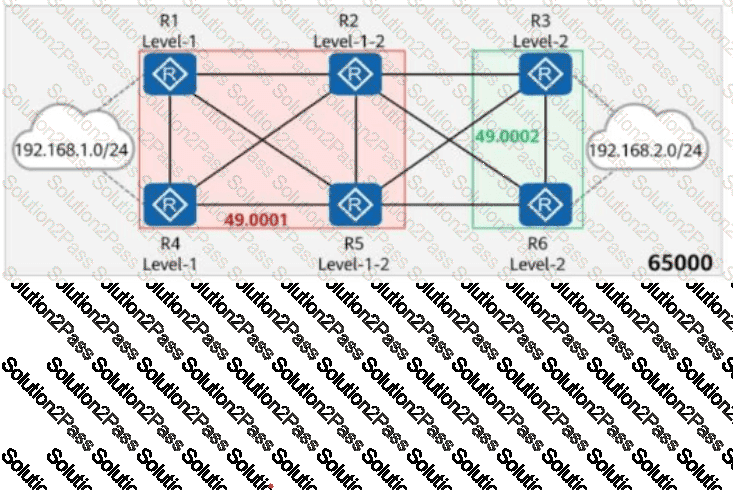
Which of the following statements are true?
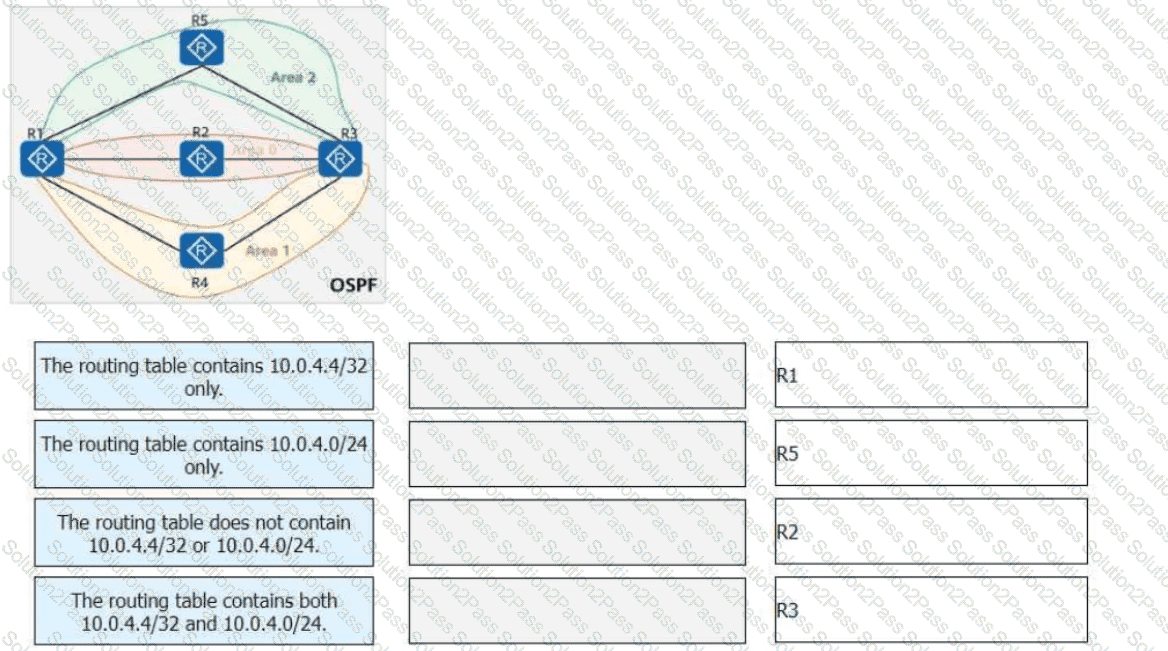
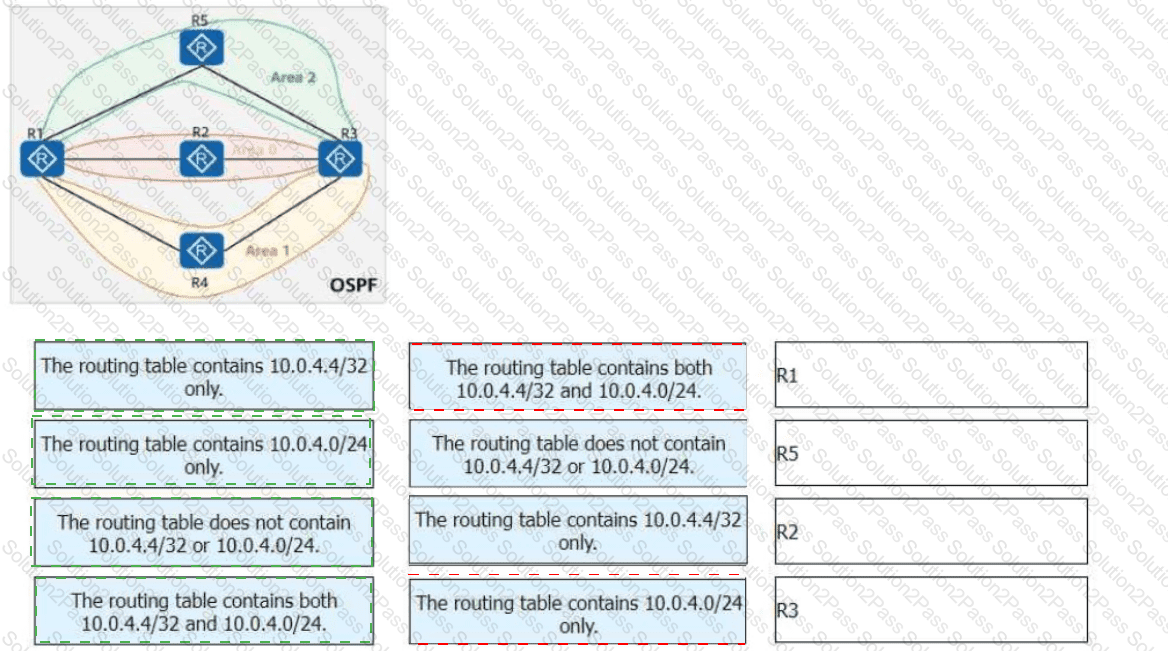
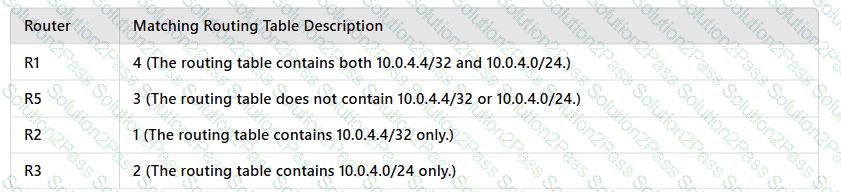
On the OSPF network shown in the figure, area 1 is an NSSA, area 2 is a stub area, and R4 imports an external route 10.0.4.4/32. The router ID of each router is 10.0.X.X, where X is the router number. The asbr-summary 10.0.4.0 255.255.255.0 command is configured in the OSPF processes of R1 and R3.
Match the following descriptions of routing tables with the corresponding routers:
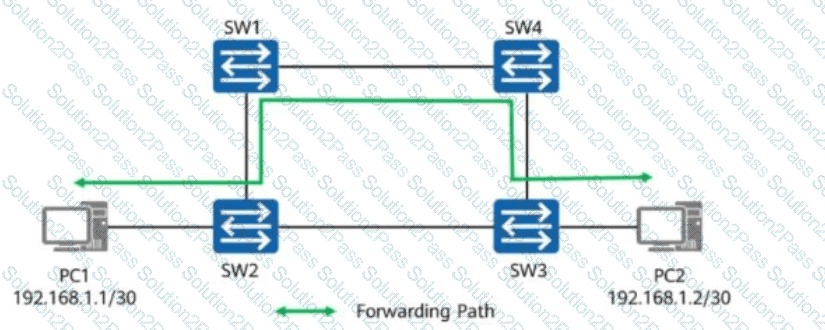
On the network shown in the figure, a network engineer finds that the path between PC1 and PC2 is not the optimal path, and all links along the path have the same cost.
Given this, which of the following routers may be the root bridges of the Layer 2 network?
Options:
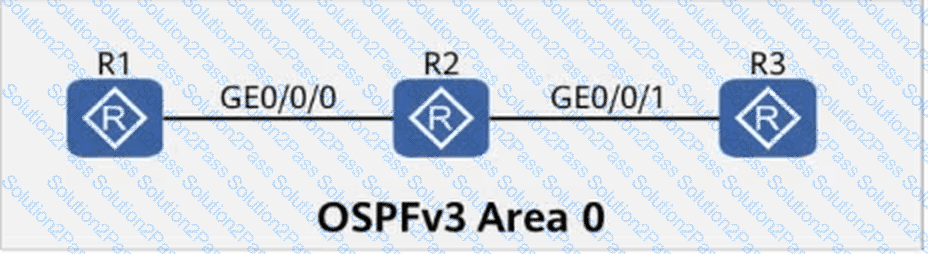
On the OSPFv3 network shown in the figure, the LSDB of R2 contains _____ Router-LSAs. (Enter only digits.)
OSPFv3 runs on R1 and R2, and the IPv6 addresses configured for the interfaces are marked in the figure.
The router IDs of R1 and R2 are 10.0.1.1 and 10.0.2.2, respectively.
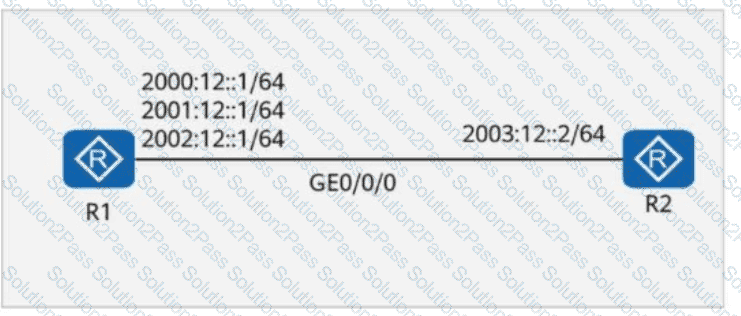
Which of the following statements is true?
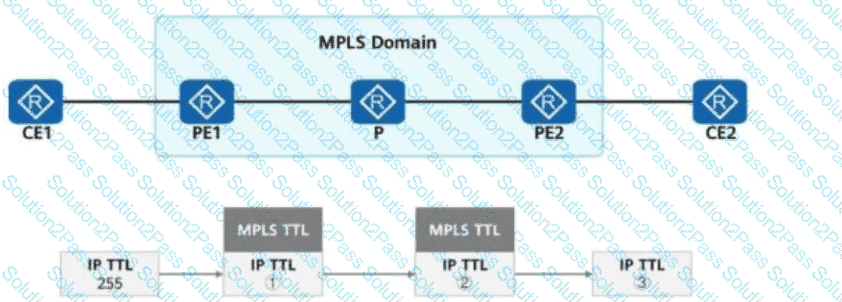
When an IP packet passes through an MPLS network, an MPLS device processes the TTL value in the packet.
If the pipe mode is used in the topology shown in the figure, which of the following is the TTL value in the IP packet?
Options:
There are two types of network maintenance: routine maintenance and troubleshooting. Skilled maintenance personnel can maintain the network based on their experience, without needing to comply with the operation guidelines.
On a broadcast network, routers (including non-DIS routers) of the same level on a network segment can establish neighbor relationships. In the implementation of BFD for IS-IS, however, BFD sessions are established only between a DIS and non-DIS routers, not between non-DIS routers.
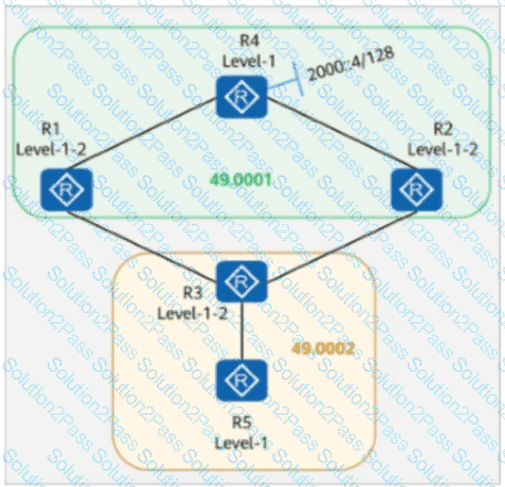
On the IS-IS IPv6 network shown in the figure, multi-topology is enabled on all routers. The IPv6 address of Loopback0 on R4 is 2000::/128. The IPv6 summary 2000::/64 level-1-2 command is configured in the IS-IS processes of R2 and R1. Which of the following statements is false?
BGP allows you to use the filter-policy acl-number import command to filter received routes. The value of ad-number ranges from 2000 to 3999.
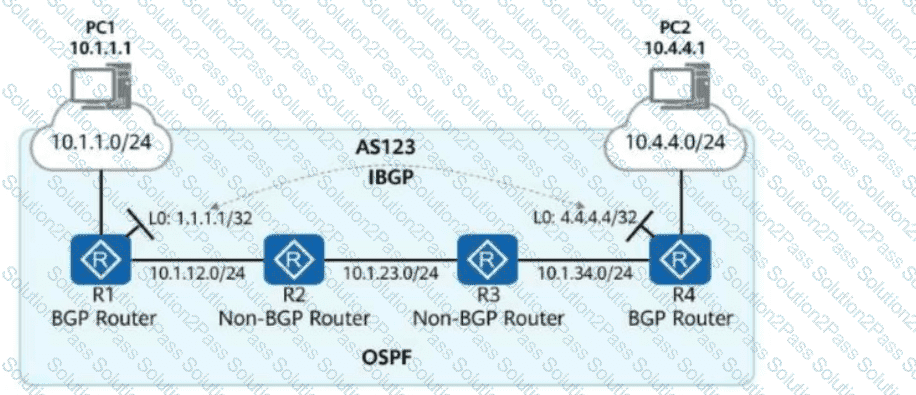
As shown in the figure, R1 to R4 are four routers in AS123. They all run OSPF to implement route reachability within the AS.
Network segments 10.1.1.0/24 and 10.4.4.0/24 are not advertised into OSPF.
R1 and R4 establish an IBGP peer relationship using Loopback0 and advertise network segments 10.1.1.0/24 and 10.4.4.0/24 into BGP.
Which of the following methods can be used to implement communication between PC1 and PC2?
Options:
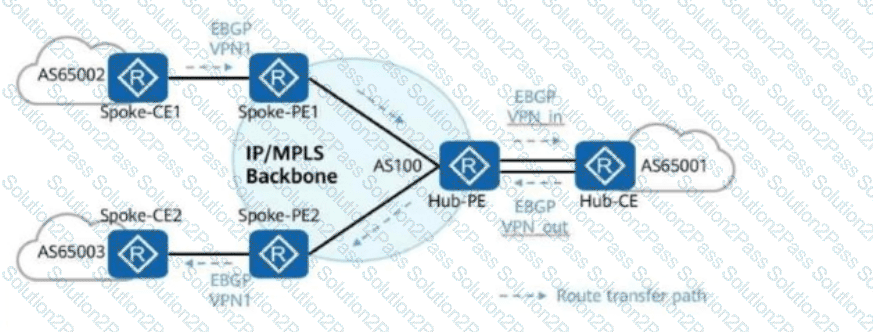
In the hub-spoke networking shown in the figure, which of the following commands must be configured on the Hub-PE to ensure correct route transmission?
On the OSPFv3 network shown in the figure:
Area 1 is a stub area
Area 2 is a common area
Area 3 is an NSSA
The IPv6 address of Loopback0 on R6 is 2000::6/128.
The router ID of each router is 10.0.X.X, where X is the router number.
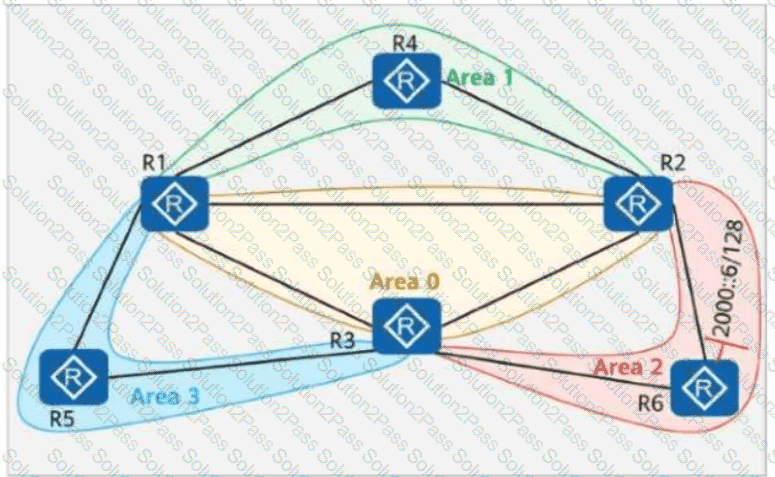
Which of the following statements are true?