H12-831_V1.0 Huawei HCIP-Datacom-Advanced Routing & Switching Technology V1.0 Free Practice Exam Questions (2026 Updated)
Prepare effectively for your Huawei H12-831_V1.0 HCIP-Datacom-Advanced Routing & Switching Technology V1.0 certification with our extensive collection of free, high-quality practice questions. Each question is designed to mirror the actual exam format and objectives, complete with comprehensive answers and detailed explanations. Our materials are regularly updated for 2026, ensuring you have the most current resources to build confidence and succeed on your first attempt.
RD and RT are introduced to BGP/MPLS IP VPN networks. Which of the following statements are true about RD and RT?
LDP sessions have been established between three devices on an MPLS network. Which of the following operations will cause the local LDP session to be re-established?
Which of the following symptoms may accompany a Layer 2 loop occurring on a network?
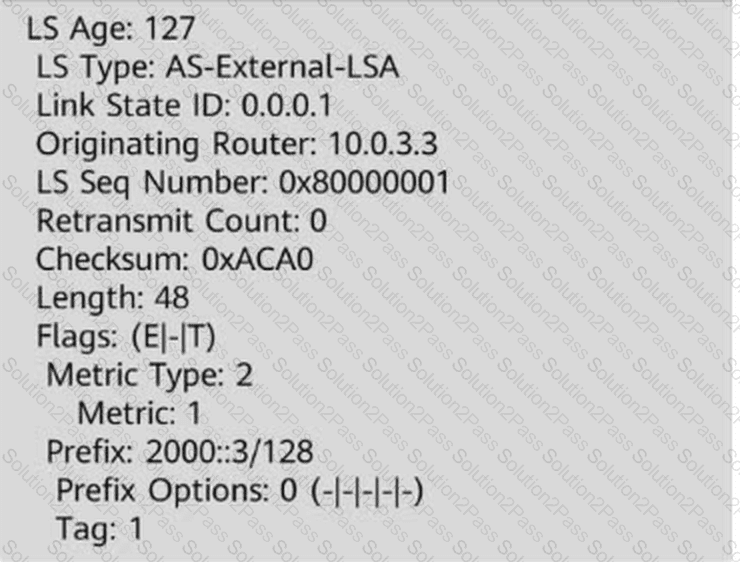
The figure shows the AS-External-LSA generated by a router. Which of the following statements are true based on the LSA?
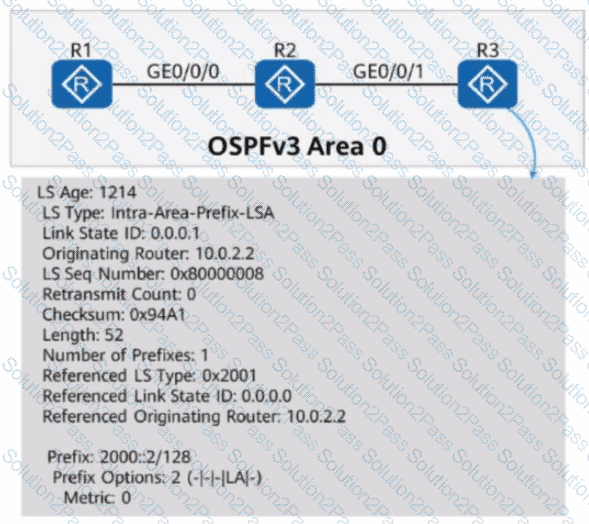
On the OSPFv3 network shown in the figure, OSPFv3 is enabled on the interfaces connecting R1, R2, and R3. The router ID of each router is 10.0.X.X, where X is the number of the router. If you check detailed information about an LSA on R3, the command output shows that the LSA is generated by R2 and describes the IPv6 prefix address associated with the Router-LSA.
On the network shown in the figure, the network administrator configures the DHCP snooping trust function on the switch.
GE0/0/2 is a trusted interface (connected to the DHCP Server).
GE0/0/3 is an untrusted interface (potential attacker).
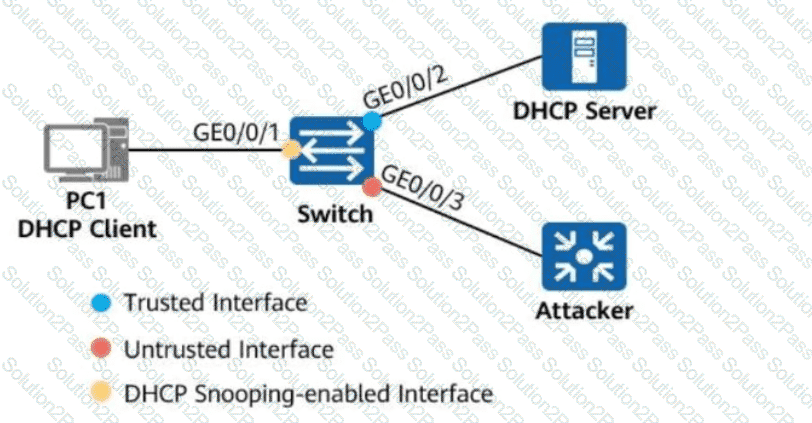
Which of the following statements are true about the two interfaces?
Options:
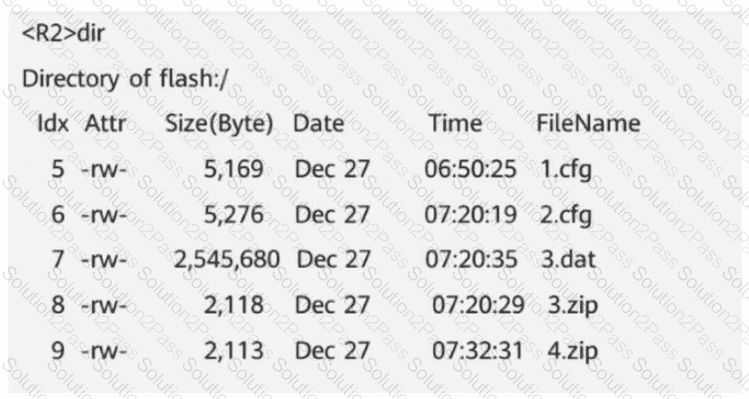
The figure shows the file information on R2. When a network engineer runs the dir | exclude 1 command to view the file information, which of the following files will be displayed?
On the network shown in the figure, EBGP peer relationships are established between neighboring routers through directly connected interfaces.
The router ID of each router is 10.0.X.X, and the AS number is 6500X, where X is the number of the router.
Both R1 and R4 have static routes to 192.168.1.0/24, which are imported to BGP through the import-route command.
The aggregate 192.168.1.0/16 detail-suppressed command is configured on R2.
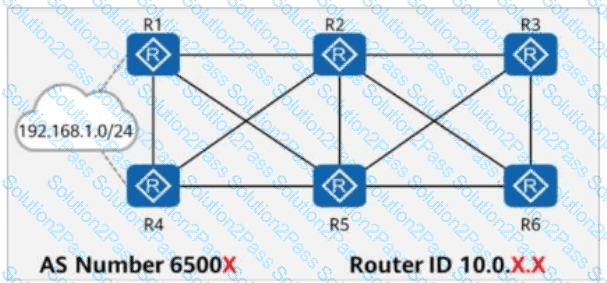
Which of the following is the path for traffic from R3 to 192.168.1.0/24?
Which of the following is not added for IS-IS to support IPv6 route processing and calculation?
The source IP address of IS-IS Hello packets is changed to the link-local address.
TLV 232, which is equivalent to the IP Interface Address TLV in IPv4, except that the original 32-bit IPv4 address is changed to a 128-bit IPv6 address.