EFM NCC Certified - Electronic Fetal Monitoring Free Practice Exam Questions (2026 Updated)
Prepare effectively for your NCC EFM Certified - Electronic Fetal Monitoring certification with our extensive collection of free, high-quality practice questions. Each question is designed to mirror the actual exam format and objectives, complete with comprehensive answers and detailed explanations. Our materials are regularly updated for 2026, ensuring you have the most current resources to build confidence and succeed on your first attempt.
A reliable indicator of fetal oxygenation is fetal
A 45-year-old woman at 36-weeks gestation presents for a nonstress test. Vital signs are:
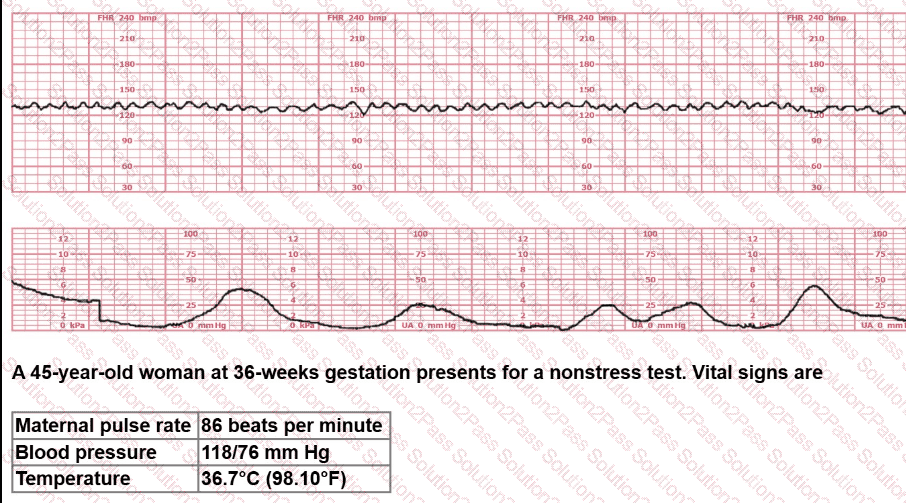
Maternal pulse rate: 86 beats per minute
Blood pressure: 118/76 mm Hg
Temperature: 36.7°C (98.1°F)
The next course of action would include:
Interventions undertaken to address fetal tachycardia are targeted at maximizing
During amnioinfusion, the infusion should be stopped periodically to assess changes in:
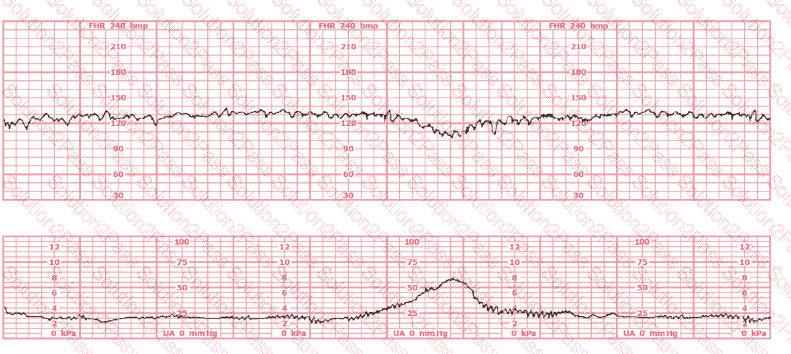
The pattern on the fetal heart rate tracing shown is likely due to
An internal electronic fetal monitor tracing continues to record artifact despite equipment troubleshooting and replacement of the spiral electrode. The next action is to:
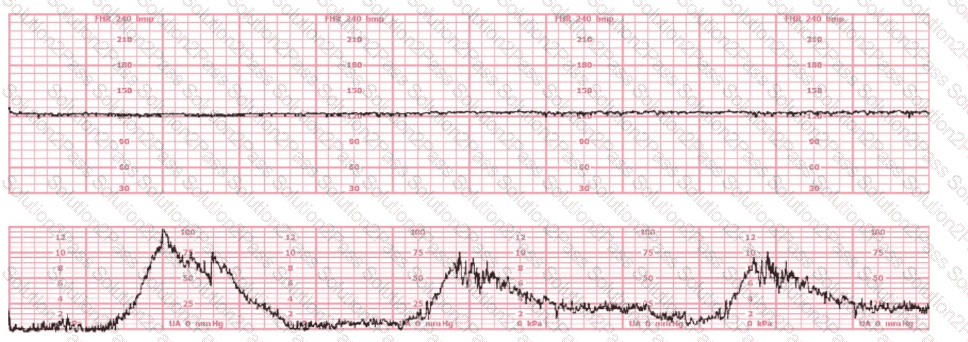
The tracing shown is from a woman at 28-weeks gestation in the post-anesthesia care unit (PACU) after an appendectomy. She is alert and awake. Based on this fetal heart rate pattern, the most appropriate intervention is:
When documenting the occurrence of late decelerations in the medical record, what should be charted?
Patient safety is enhanced when alarms:
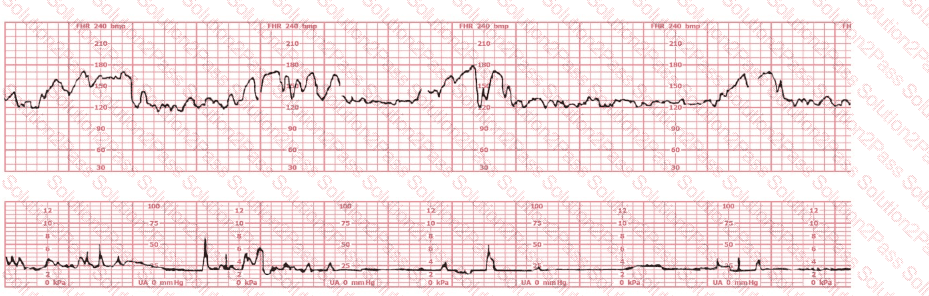
The fetal heart rate tracing shown demonstrates:
The tracing shown is a:
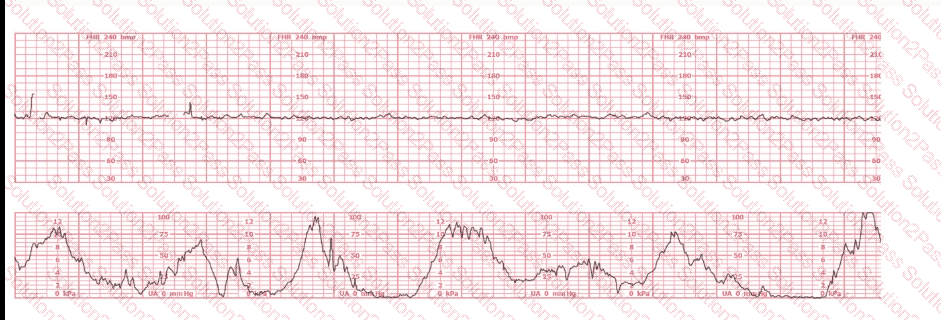
A 20-year-old woman (G1P0) at 40-weeks gestation was admitted for cervical ripening with dinoprostone (Cervidil) four hours ago. She developed the pattern shown one hour ago. She has been changed to a lateral position and given a fluid bolus, and the pattern continues. An appropriate intervention would be to:
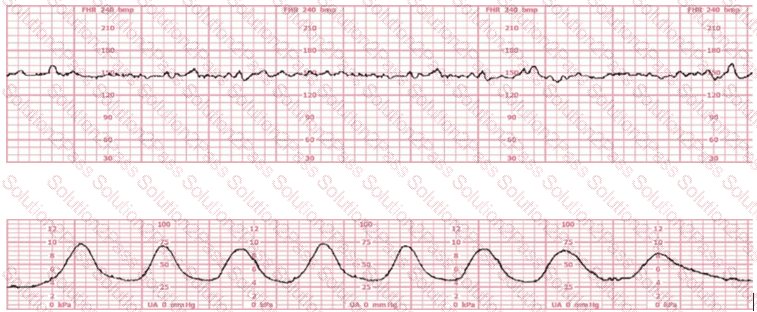
In the event of recurrent variable decelerations with thick meconium, amnioinfusion is recommended to:
A fetal heart rate tracing is abnormal. A change in maternal position and oxygen administration do not correct the pattern. Following birth, a fetal cord blood sample is taken:
pH = 7.25
PaCO₂ = 46 mm Hg
PaO₂ = 20 mm Hg
HCO₃ = 22 mEq/L
Base deficit = –4 mEq/L
These results are best interpreted as:
The most probable underlying fetal physiologic cause for this tracing would be:
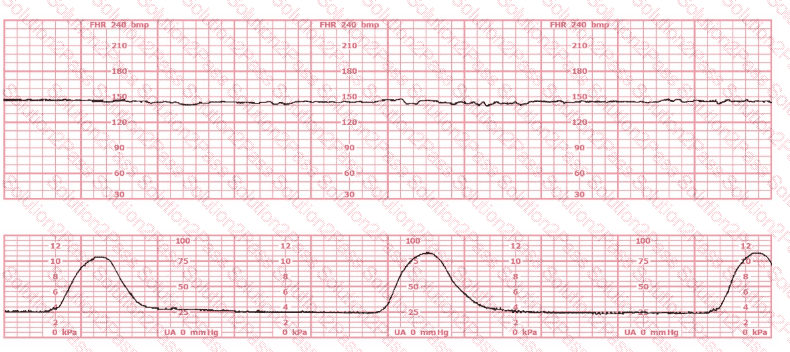
(Full question statement)
The fetal heart rate tracing shown is obtained upon the woman's admission to labor and delivery. This tracing is most consistent with what maternal condition?
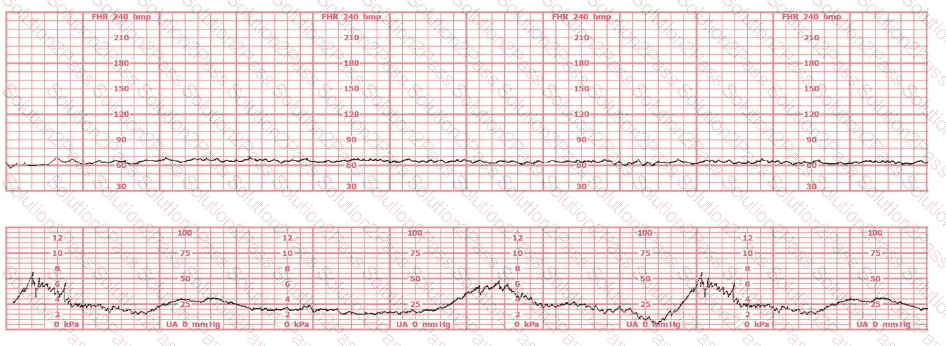
Prenatal diagnosis shows that a fetus has renal agenesis. During delivery, what type of electronic fetal heart rate pattern is most likely to be seen due to a common complication associated with this syndrome?