EFM NCC Certified - Electronic Fetal Monitoring Free Practice Exam Questions (2026 Updated)
Prepare effectively for your NCC EFM Certified - Electronic Fetal Monitoring certification with our extensive collection of free, high-quality practice questions. Each question is designed to mirror the actual exam format and objectives, complete with comprehensive answers and detailed explanations. Our materials are regularly updated for 2026, ensuring you have the most current resources to build confidence and succeed on your first attempt.
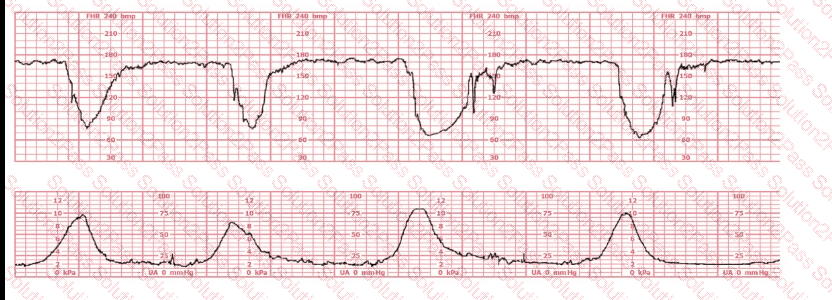
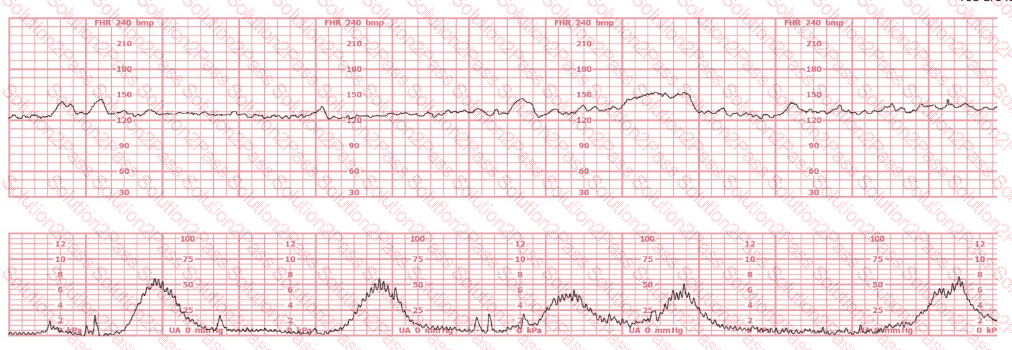
A woman is admitted at 41-weeks gestation for fetal evaluation following a motor vehicle accident. She reports that she hit her abdomen on the steering wheel. The underlying physiology of the tracing is most likely:
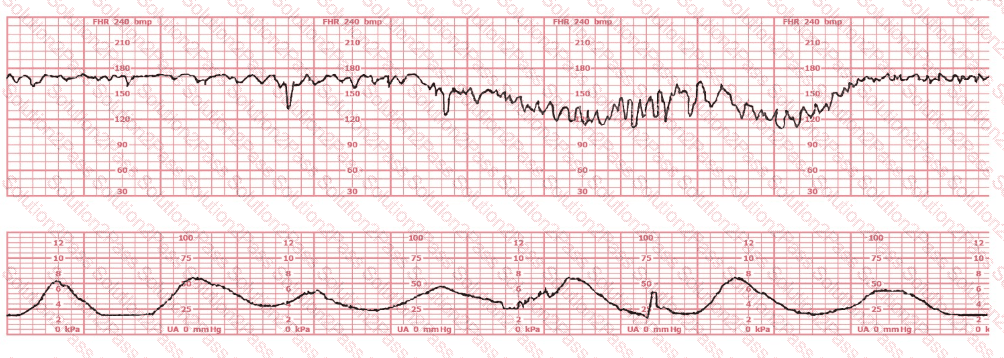
To differentiate a fetal dysrhythmia from artifact, it is important to recognize that artifact appears as deflections that are:
Stimulation of the vagus nerve in a healthy fetus will cause:
When R-R intervals are short, the fetal heart rate is
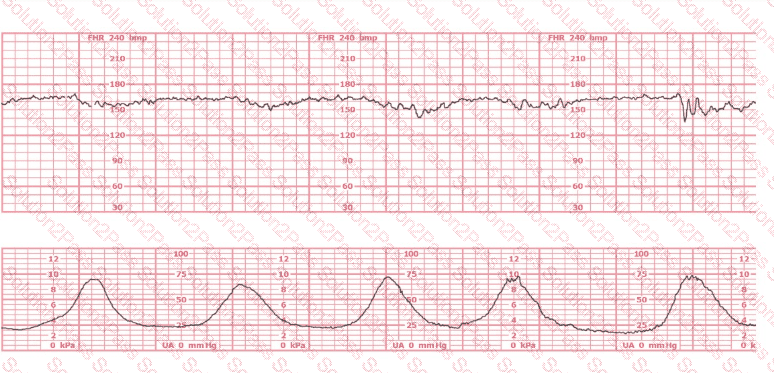
This fetal heart rate tracing is obtained upon the woman's admission to labor and delivery. This tracing is most reflective of:
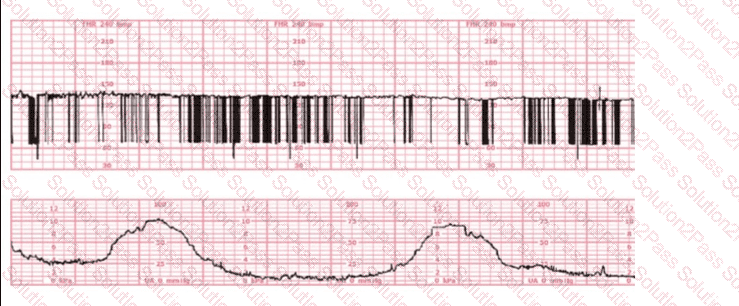
The baseline fetal heart rate in this tracing is:
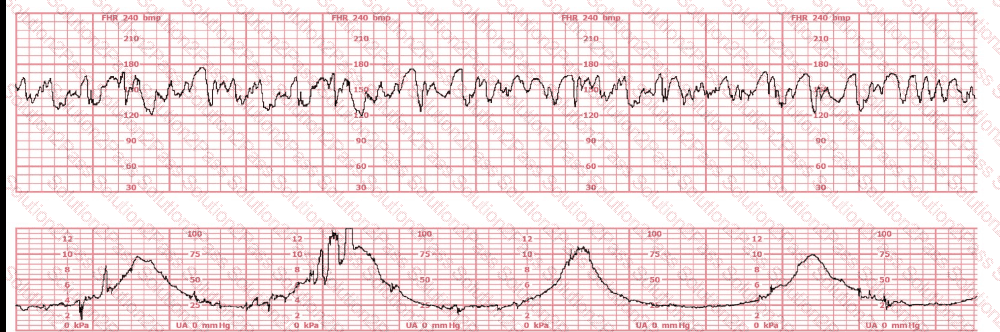
The baseline heart rate of a 28-week fetus is 170 bpm. The next step is to:
A fetus displays a baseline heart rate of 125 beats per minute with moderate variability. During a contraction, the baseline rate drops abruptly to 80 beats per minute with gradual return to baseline over 90 seconds. This is classified as:
This fetal heart rate tracing represents:
The tracing shown is a:
(Full question statement)
Interobserver reliability in interpretation of fetal heart rate tracings is greatest when the tracing is:
Maternal–fetal exchange during labor is diminished by:
Fetal supraventricular tachycardia will often appear on the monitor as
Upon admission, the clinician discusses indications, risks, and benefits of electronic fetal monitoring. This reflects which ethical concept?
This is a fetal heart rate tracing of a multiparous woman whose cervix is 7 cm dilated on admission. The most likely cause for this pattern is:
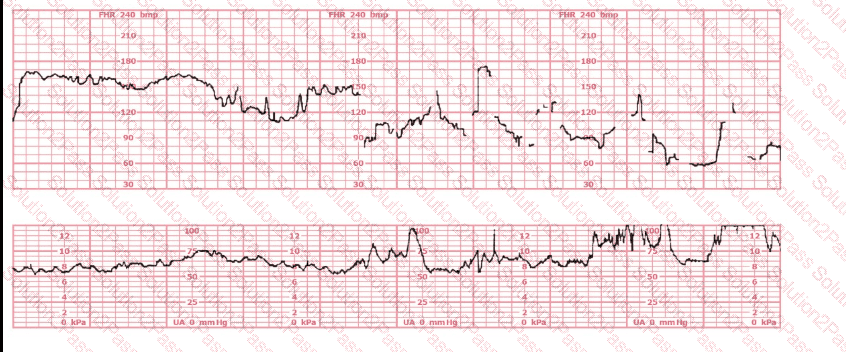
This is a tracing of a multiparous woman in the second stage of labor. The vertex is at +3 station. This pattern has continued for the last 20 minutes. She has been pushing for 2½ hours, and oxytocin is infusing at 12 milliunits/minute. Management should include
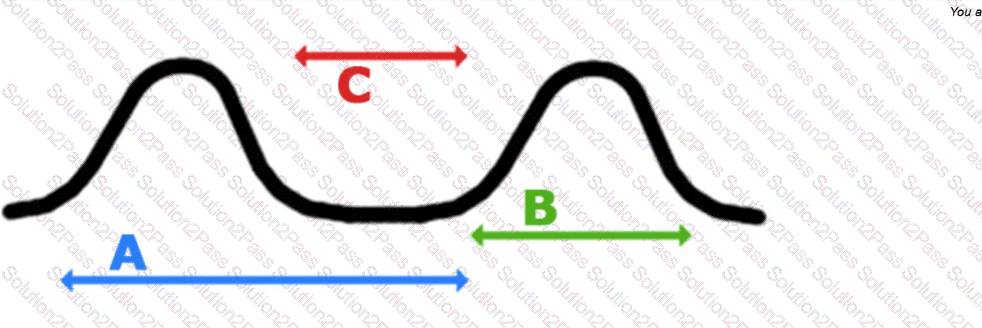
The duration of a contraction is best represented by which colored arrow?
A key differentiating factor when determining if a deceleration is early or late is the
A woman in active labor at 8 cm experiences spontaneous rupture of membranes and acute bright red vaginal bleeding. The uterus is soft and nontender to palpation. The fetal monitor tracing has been normal and now shows tachycardia followed by bradycardia with minimal variability. The maternal blood pressure is 130/76 mm Hg, and the pulse is 86 beats per minute. The most likely cause of these findings is:
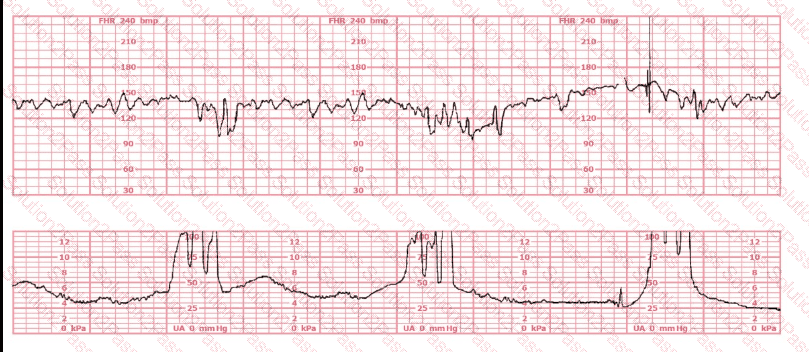
The decelerations seen in the fetal monitoring tracing shown are best described as: