MuleSoft-Platform-Architect-I Salesforce Certified MuleSoft Platform Architect (Mule-Arch-201) Free Practice Exam Questions (2026 Updated)
Prepare effectively for your Salesforce MuleSoft-Platform-Architect-I Salesforce Certified MuleSoft Platform Architect (Mule-Arch-201) certification with our extensive collection of free, high-quality practice questions. Each question is designed to mirror the actual exam format and objectives, complete with comprehensive answers and detailed explanations. Our materials are regularly updated for 2026, ensuring you have the most current resources to build confidence and succeed on your first attempt.
Total 152 questions
What best describes the Fully Qualified Domain Names (FQDNs), also known as DNS entries, created when a Mule application is deployed to the CloudHub Shared Worker Cloud?
Which statement is true about identity management and client management on Anypoint Platform?
Refer to the exhibit.
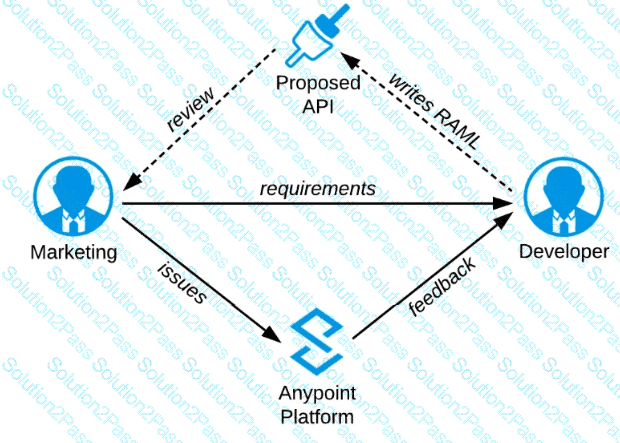
A RAML definition has been proposed for a new Promotions Process API, and has been published to Anypoint Exchange.
The Marketing Department, who will be an important consumer of the Promotions API, has important requirements and expectations that must be met.
What is the most effective way to use Anypoint Platform features to involve the Marketing Department in this early API design phase?
A) Ask the Marketing Department to interact with a mocking implementation of the API using the automatically generated API Console

B) Organize a design workshop with the DBAs of the Marketing Department in which the database schema of the Marketing IT systems is translated into RAML
C) Use Anypoint Studio to Implement the API as a Mule application, then deploy that API implementation to CloudHub and ask the Marketing Department to interact with it
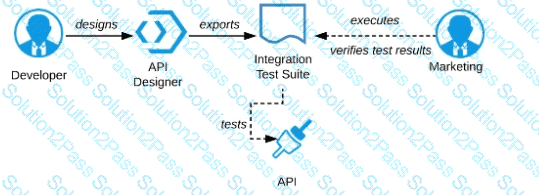
D) Export an integration test suite from API designer and have the Marketing Department execute the tests In that suite to ensure they pass

A company uses a hybrid Anypoint Platform deployment model that combines the EU control plane with customer-hosted Mule runtimes. After successfully testing a Mule API implementation in the Staging environment, the Mule API implementation is set with environment-specific properties and must be promoted to the Production environment. What is a way that MuleSoft recommends to configure the Mule API implementation and automate its promotion to the Production environment?
The responses to some HTTP requests can be cached depending on the HTTP verb used in the request. According to the HTTP specification, for what HTTP verbs is this safe to do?
Total 152 questions